


Central Germany, circa 1825.
Exquisitely veneered in fiddleback maple on a fine softwood body.
The block feet, masterfully crafted from solid fiddleback maple, have been thoughtfully supplemented.
The piece retains its inaugural locks.
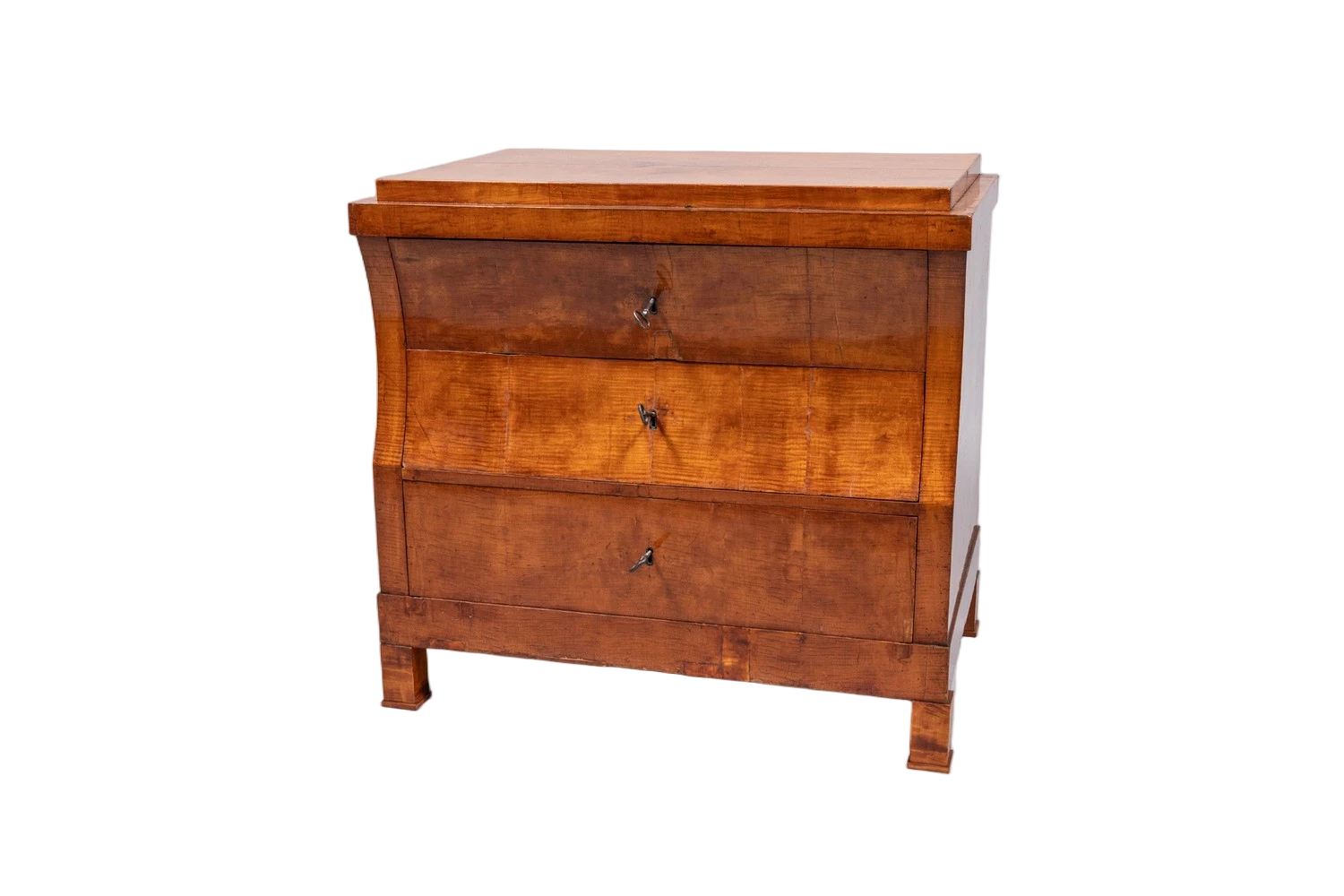
Central Germany, circa 1825.
Exquisitely veneered in fiddleback maple on a fine softwood body.
The block feet, masterfully crafted from solid fiddleback maple, have been thoughtfully supplemented.
The piece retains its inaugural locks.
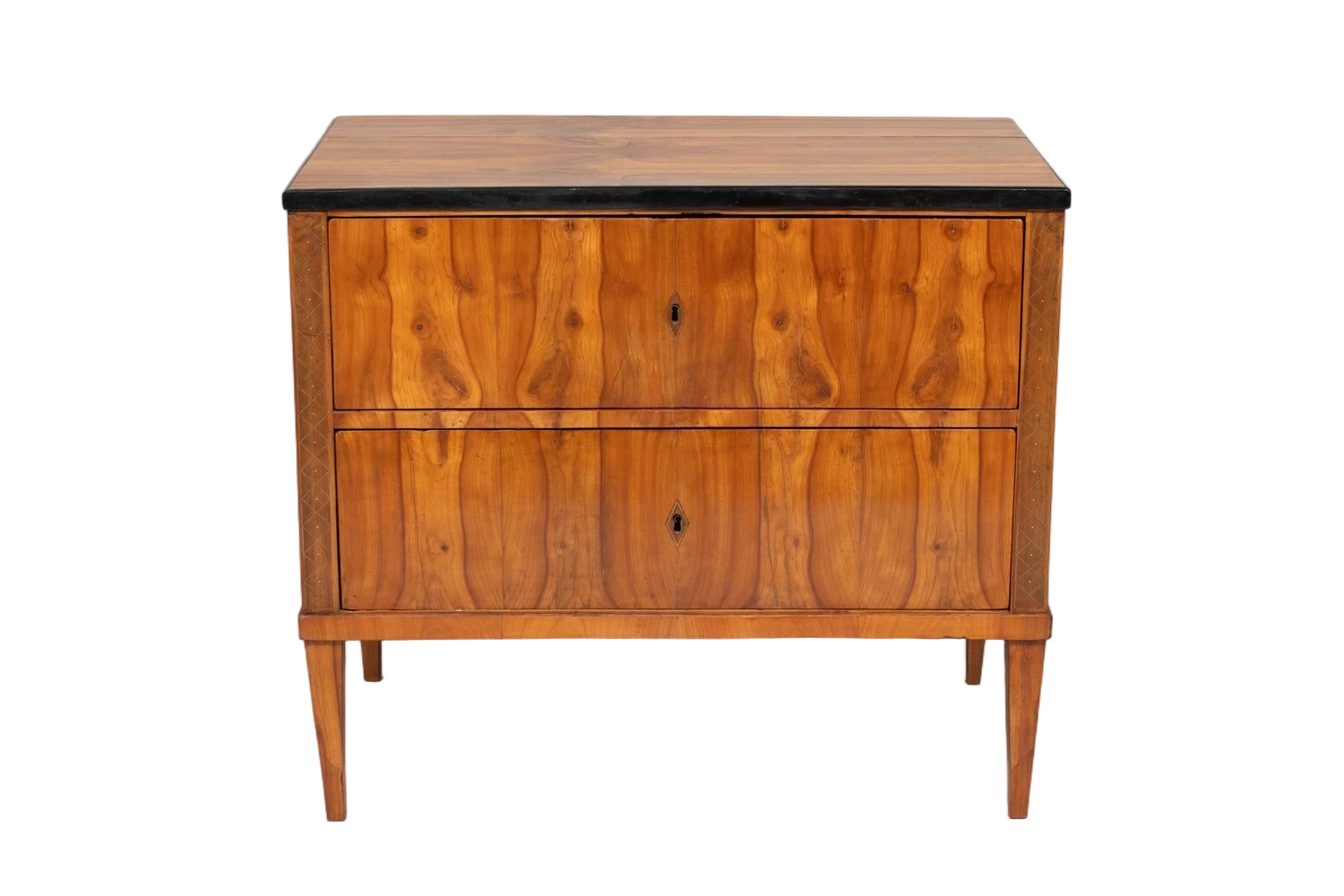
Thuringia, circa 1815/20.
Exquisitely veneered in vibrantly grained, multiple-mirrored cherrywood on a body of maple.
The blackened moldings are masterfully crafted from solid pearwood.
Standing on its original, veneered tapered legs.
The piece is further refined by fine brass inlays set against a dark-brown stained maple background.
Complete with original locks and one inaugural key.
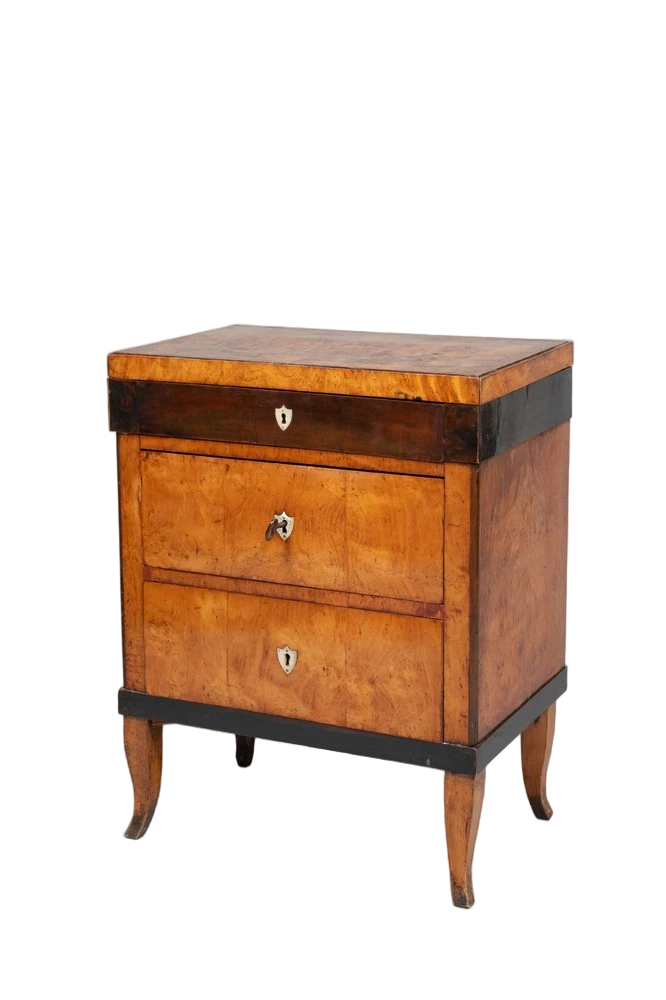
Baltic region, circa 1815.
Exquisitely veneered in birch wood and ebonized pearwood (for the blackened elements) on a fine softwood body.
The piece is in a magnificent original condition.
It features its authentic legs and locks, as well as mother-of-pearl inlaid escutcheons (with one having been thoughtfully supplemented).
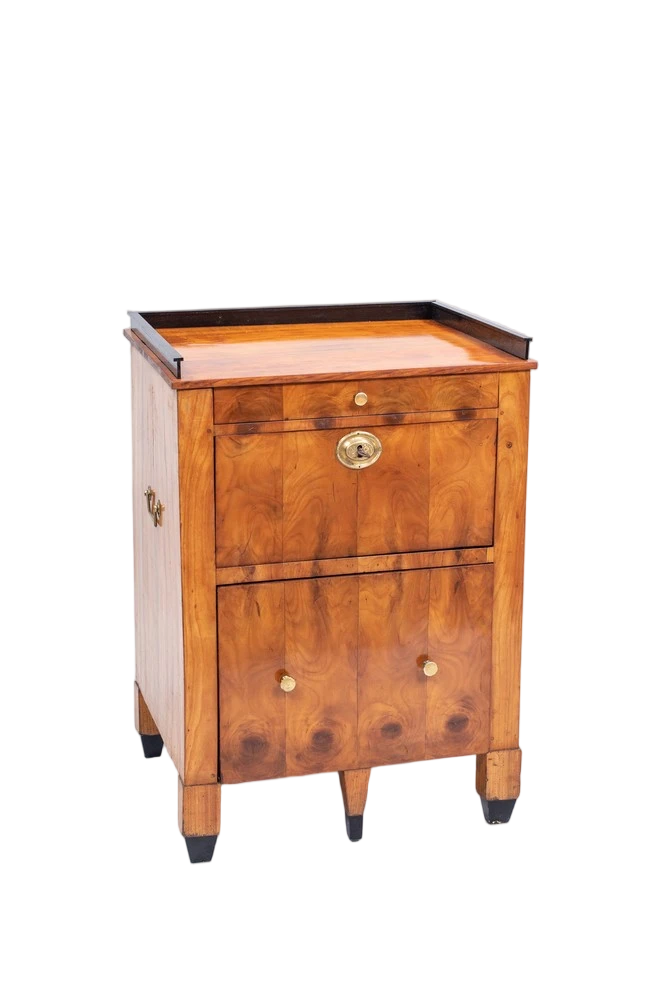
Preserved in its original condition.
Rhineland, circa 1830.
Exquisitely veneered in cherrywood on bodies of softwood, poplar, and oak. Standing on its original, partially ebonized tapered legs.
Complete with its inaugural hardware and authentic pull knobs.
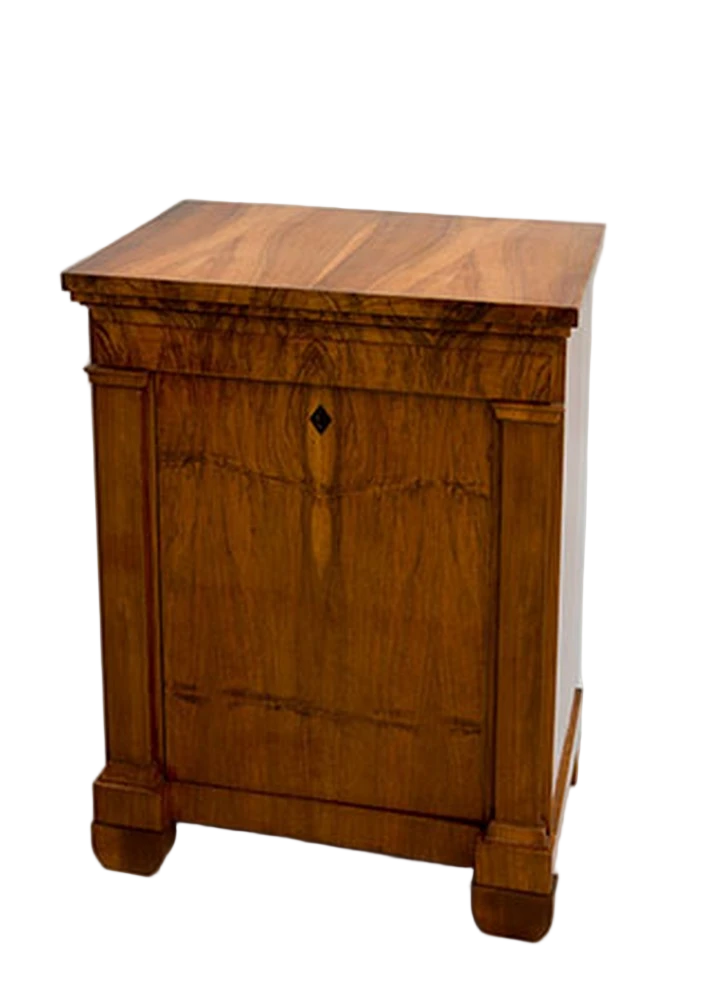
Rhineland, circa 1830.
Exquisitely veneered in walnut on an oak body. The piece features its inaugural lock, designed to simultaneously secure both the door and the top drawer.
Accompanied by its authentic internal shelf.
The feet have been thoughtfully supplemented.
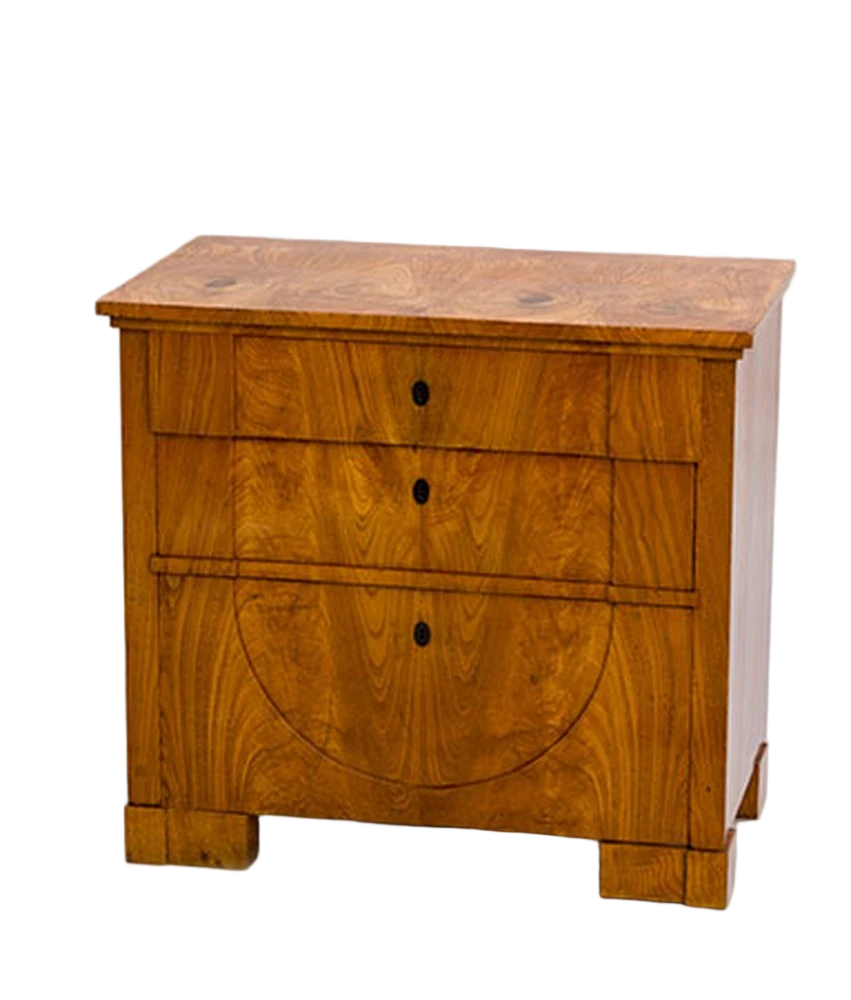
Southern Lower Saxony, circa 1830.
Exquisitely veneered in ash wood on a fine softwood body. The piece retains its inaugural locks.
The feet have been thoughtfully supplemented.
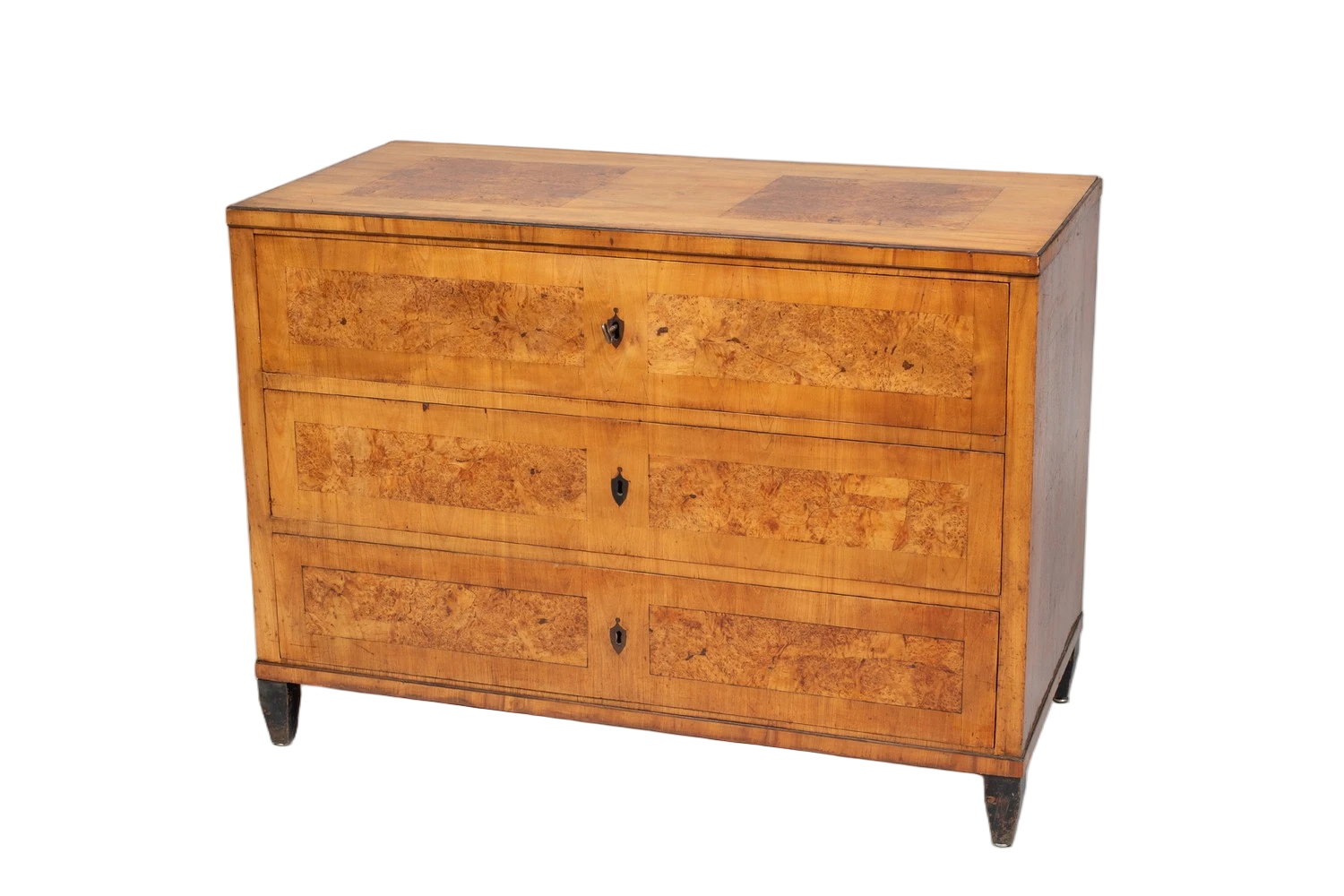
Likely from the court cabinetmaker Daniel’s workshop, Munich, circa 1820.
Exquisitely veneered in cherrywood and alder burr wood (panel fields) on a fine softwood body.
The visible moldings and the edge of the top surface are refined with blackened band inlays.
Standing on its original, ebonized tapered legs.
Complete with authentic inset escutcheons crafted from dark-stained wood, presumably pearwood.
The piece retains its original locks and one inaugural key.
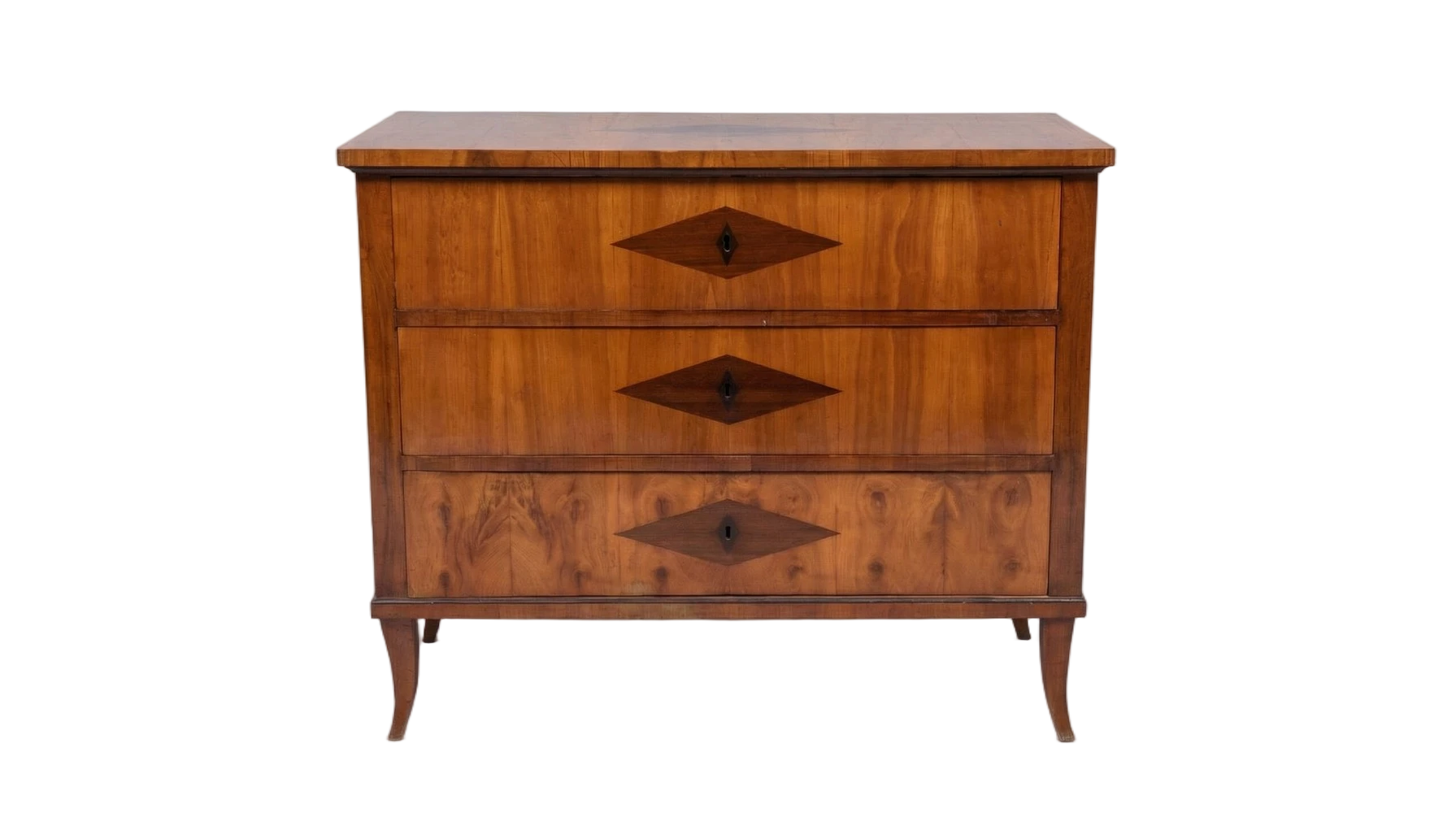
Upper Bavaria, circa 1820.
Exquisitely veneered in cherrywood and wenge on a fine softwood body.
Standing on its original, splayed tapered feet crafted from solid cherrywood.
Complete with its inaugural locks and two authentic steel-cut keys.
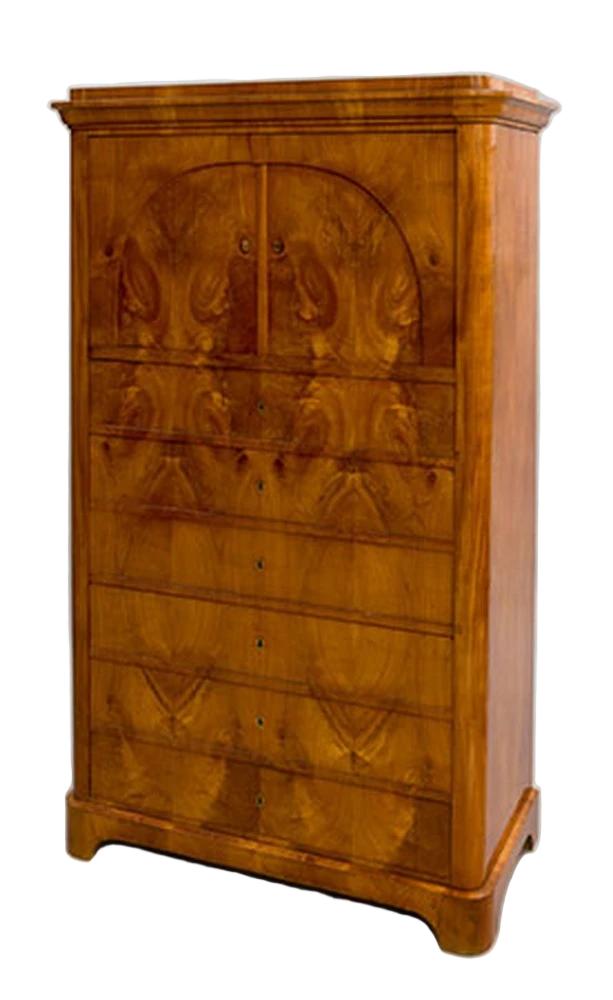
Rhineland, circa 1825/30.
Exquisitely veneered in cherrywood on a fine softwood body. The piece features its original brass escutcheons, inaugural locks, and very finely crafted keys.
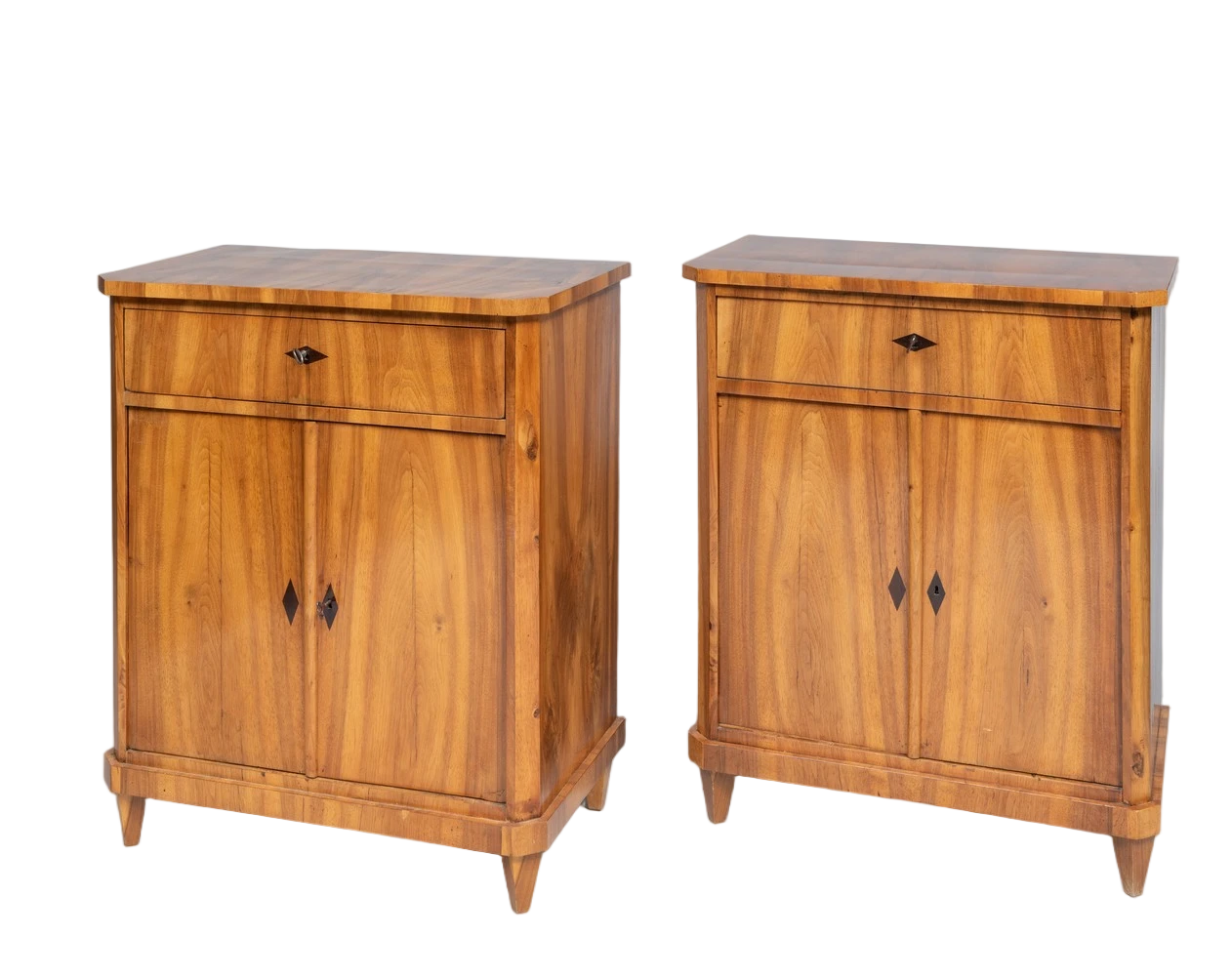
Southern Germany, likely Munich, circa 1820.
Each bears a historical owner’s label on the reverse with the following inscription: “Brunner München 19, Hildebrandtstraße 16 III m”.
Exquisite walnut veneer on a softwood carcass. Original recessed key escutcheons, likely of ebony.
Feet are later additions. Original interior shelves.
Predominantly original locks.
Literature for comparison:
This pair of demi-cabinets is illustrated in: Haaf, Rainer, Biedermeierwelten. Deutschland und Donaumonarchie, Leopoldshafen 2024, page 91, illustration 260.
Product ID:
