Category: Chests of drawers and half-cabinets

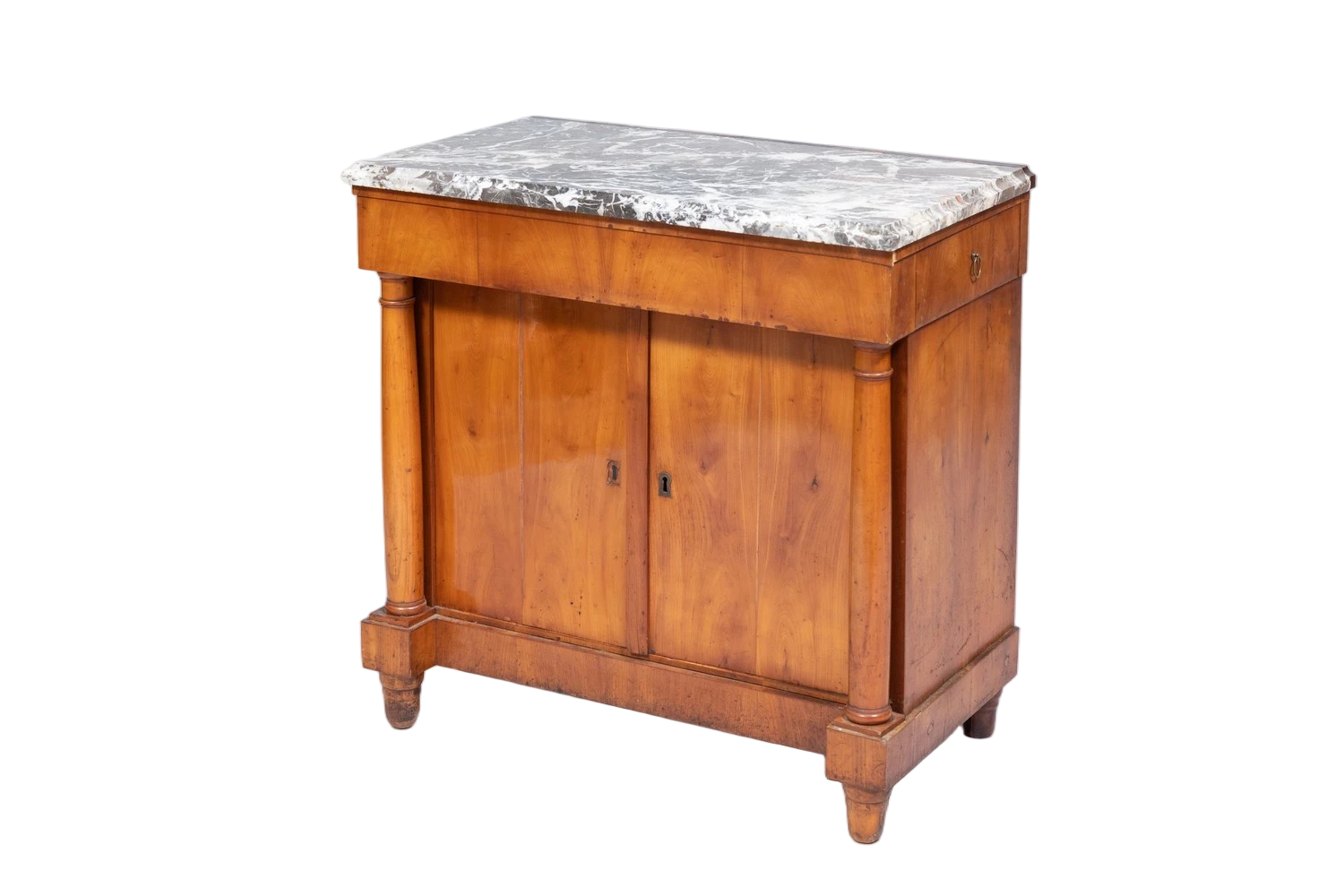
  • Exceptional Biedermeier courtly half-cabinet, featuring drawers on both the right and left sides. Entirely original condition.

    Exceptional Biedermeier courtly half-cabinet, featuring drawers on both the right and left sides. Entirely original condition.

    Austria, circa 1820.

    Veneered in cherry wood and maple burl on an oak carcass.

    Original legs crafted from solid cherry wood.

    Original, elaborately designed steel espagnolette lock with an authentic key. Brass keyhole bushings, one of which has been supplemented.

    Original marble top.

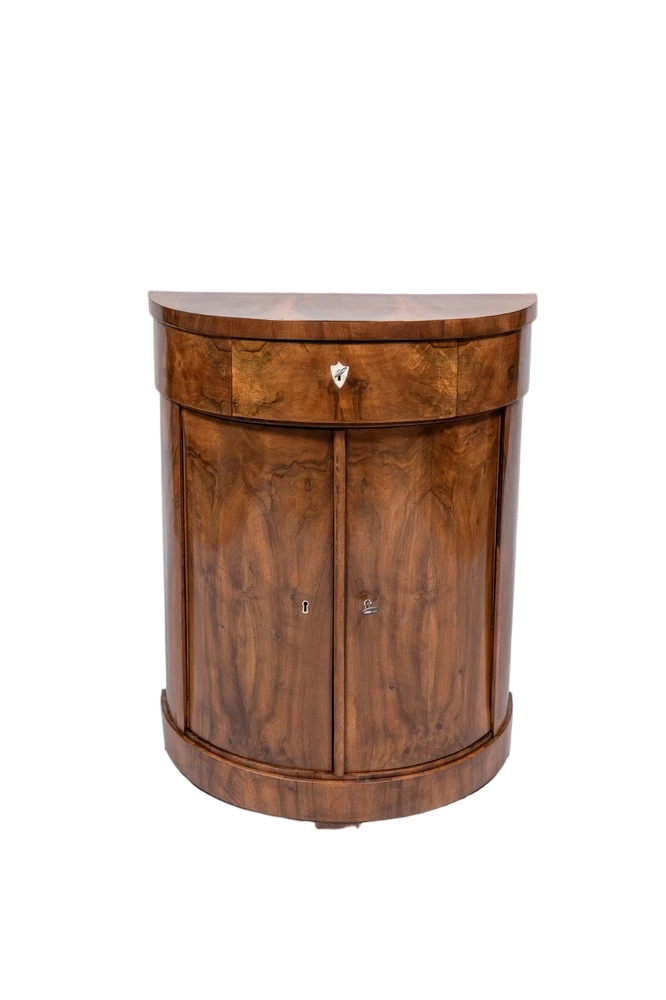
  • A dainty demi-lune cabinet, distinguished by its exceptionally beautiful veneer pattern.

    A dainty demi-lune cabinet, distinguished by its exceptionally beautiful veneer pattern.

    Central Germany, circa 1825/30.

    Exquisitely veneered in walnut on a fine softwood body.

    The cabinet retains its inaugural shelf.

    Adorned with the inaugural bone escutcheon on the top drawer; the door’s escutcheon has been thoughtfully supplemented.

    The locks have been expertly renewed to ensure continued functionality.

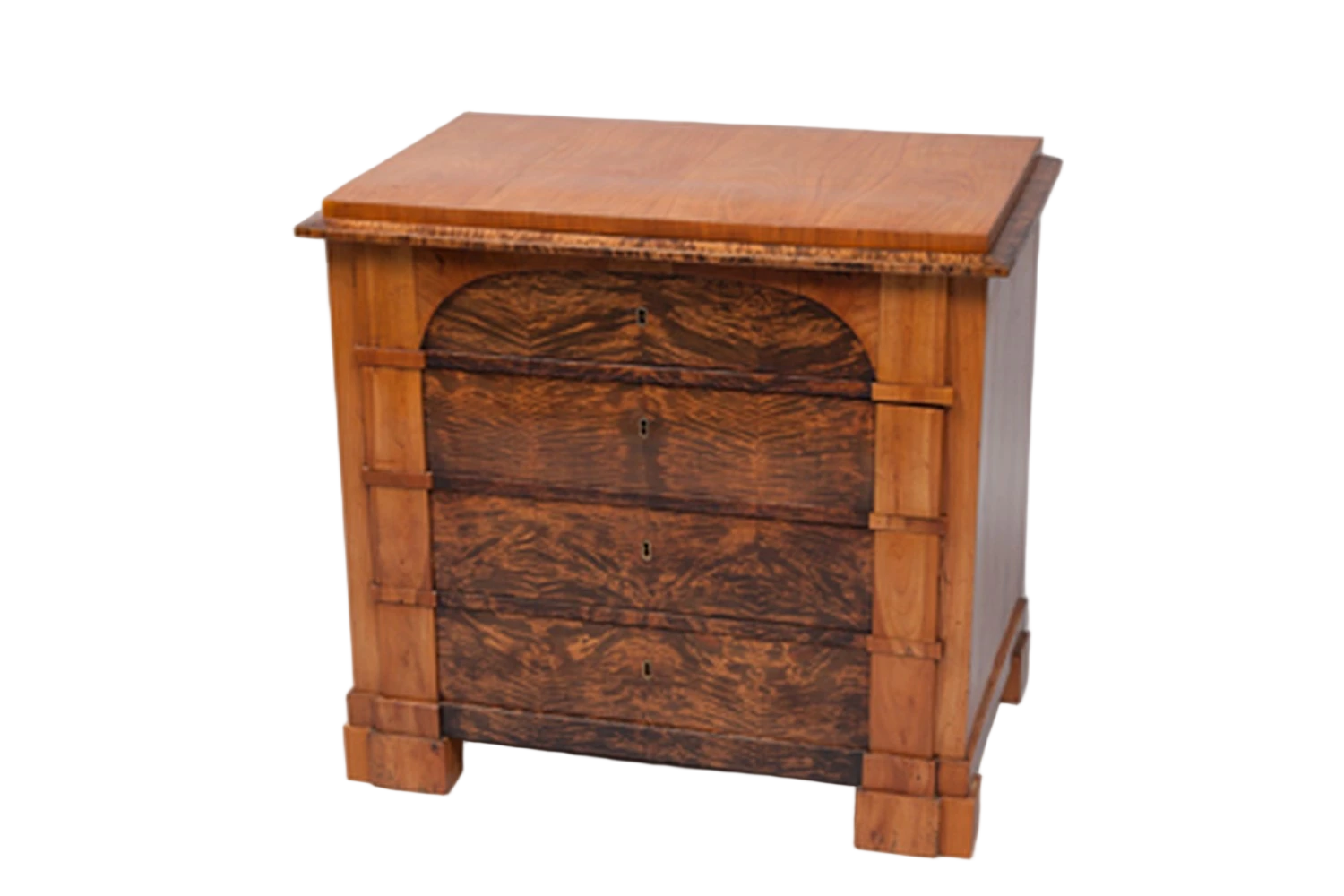
  • An exceptional Biedermeier chest of drawers, featuring dark-tinted fiddleback maple veneer.

    An exceptional Biedermeier chest of drawers, featuring dark-tinted fiddleback maple veneer.

    Thuringia, circa 1825.

    Exquisitely veneered in cherrywood and dark-stained fiddleback maple on bodies of softwood and poplar.

    The inaugural cherrywood block feet feature partial historical supplements.

    The piece retains its authentic locks.

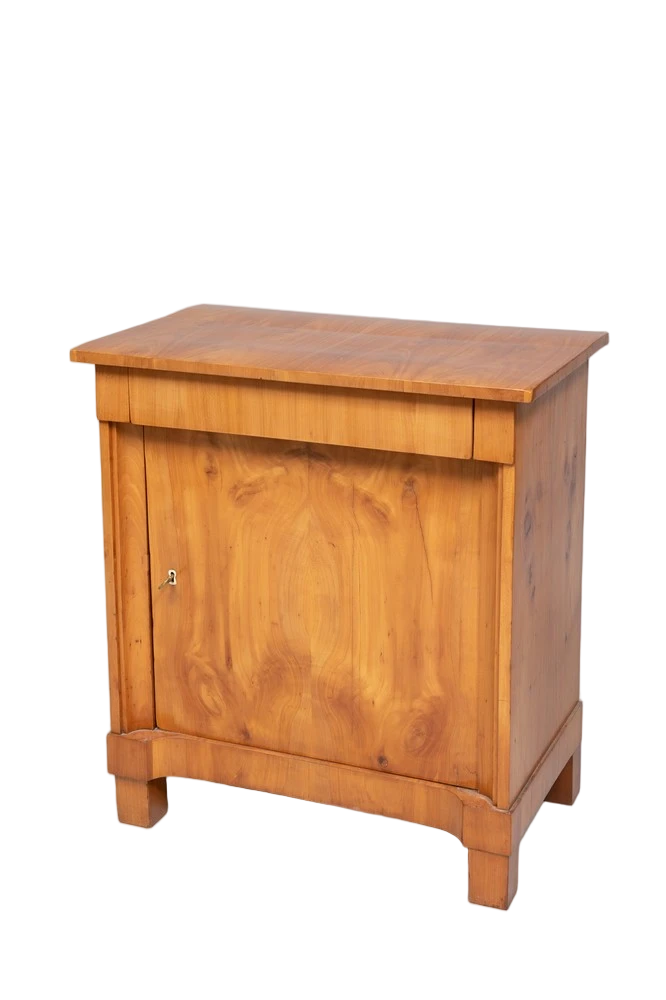
  • A dainty Biedermeier half-cabinet, featuring a sophisticated concealed top drawer.

    A dainty Biedermeier half-cabinet, featuring a sophisticated concealed top drawer.

    Rhineland, circa 1830.

    Exquisitely veneered in cherrywood on a fine softwood body.

    Standing on its original feet crafted from solid cherrywood.

    The piece retains its inaugural bone escutcheons and an authentic lock.

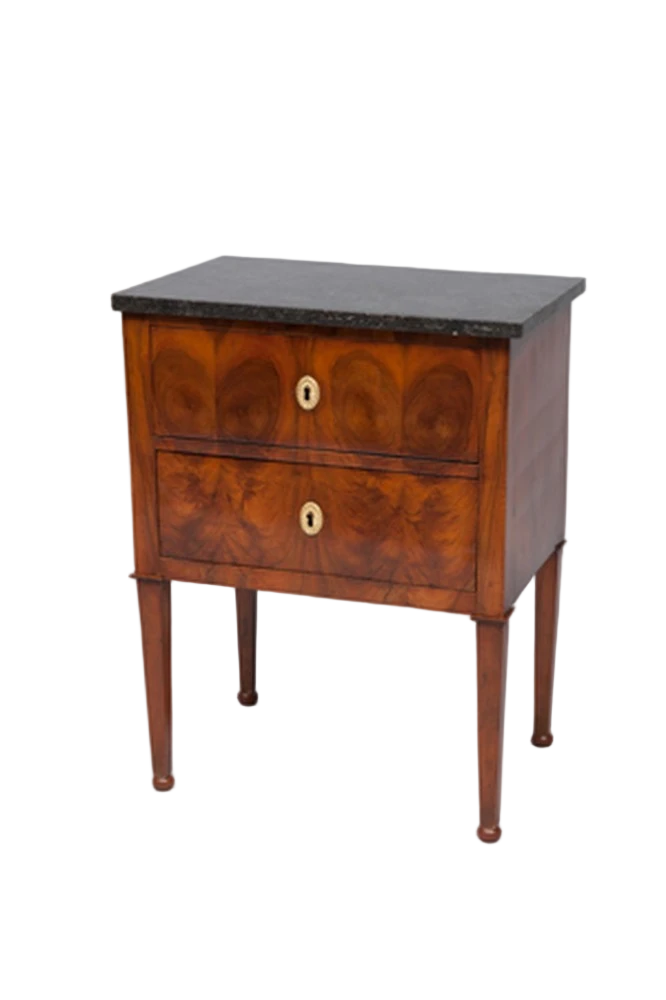
  • A dainty early Biedermeier chest of drawers, featuring its inaugural marble top.

    A dainty early Biedermeier chest of drawers, featuring its inaugural marble top.

    Southwest Germany, presumably Mannheim, circa 1815.

    Preserved in its original condition.

    Exquisitely veneered in walnut on a fine softwood body. The spheres of the feet have been thoughtfully supplemented.

    The piece retains its original locks and keys.

    The gilded escutcheons date from the period of the furniture’s creation, though they have been supplemented.

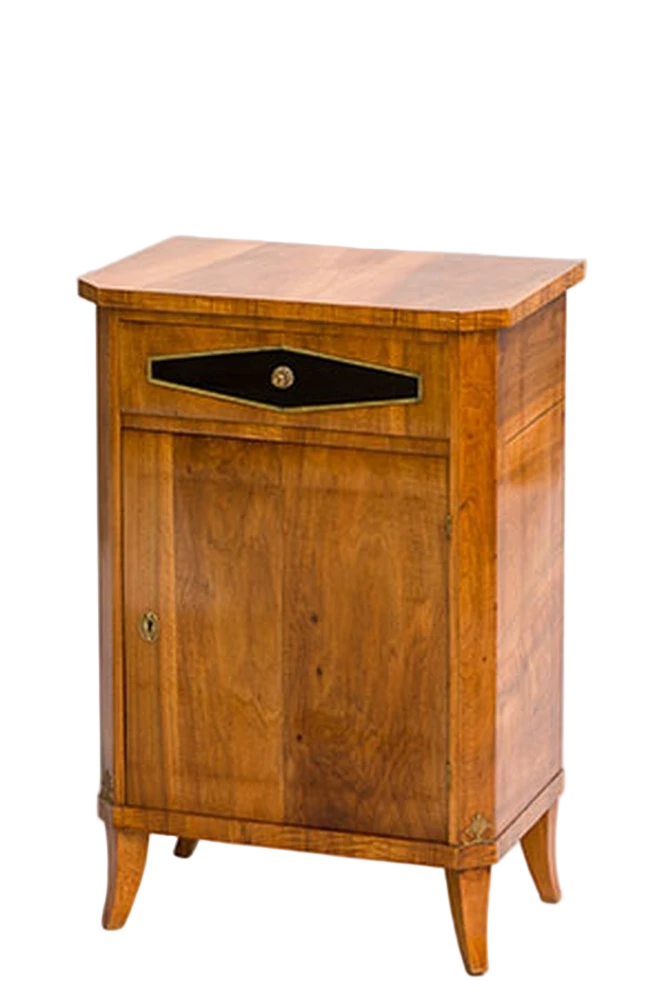
  • A dainty and refined pillar cabinet.

    A dainty and refined pillar cabinet.

    Central Germany, circa 1815.

    Exquisitely veneered in walnut on a fine softwood body. The design is accented by a diamond-shaped ebonized veneer section, elegantly framed by brass-clad moldings.

    The brass applications in the plinth area are original, as is the pull knob of the plinth drawer. The door hardware and lock have been thoughtfully supplemented.

    The cabinet stands on its original feet.

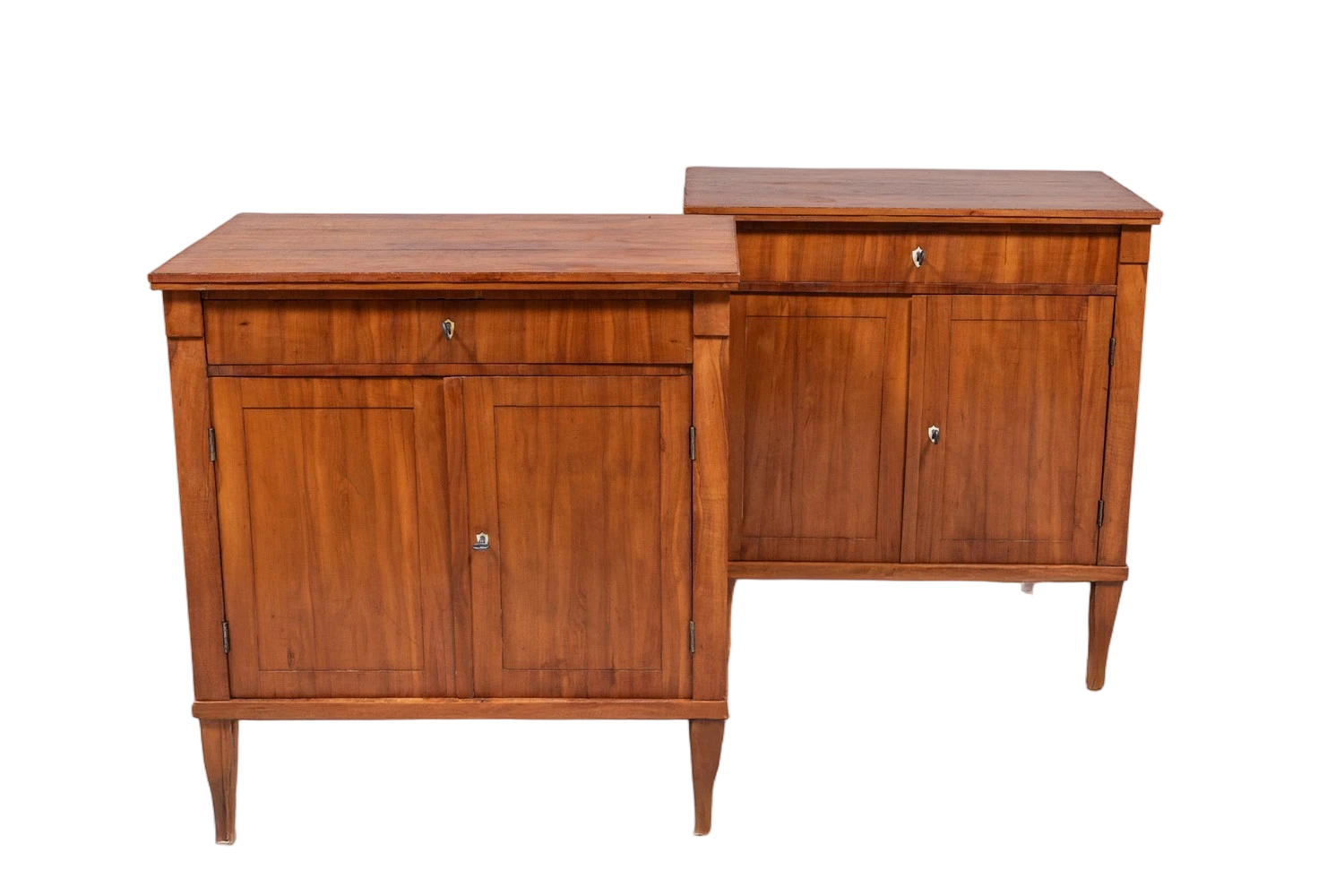
  • A pair of dainty Biedermeier half-cabinets.

    A pair of dainty Biedermeier half-cabinets.

    Central Germany, circa 1830.

    Exquisitely veneered in pearwood on a body of softwood and alder (doors). Sections are crafted from solid pearwood.

    Standing on original, solid pearwood tapered legs.

    The bone inlaid escutcheons have been supplemented.

    The lower sections retain their inaugural internal shelves.

    The doors are equipped with original espagnolette locks finished with brass cover plates.

    Note: The piece is shown prior to its final high-polish finish.

    Literature for comparison: A very similar piece in terms of style and design—in that case a dressing cabinet, also crafted from pearwood and attributed to the Hoffmann Manufactory in Leipzig—is illustrated in: Sulzbacher, Michael; Atzig, Peter, Friedrich Gottlob Hoffmann, catalogue for the exhibition: “Exquisite Cabinetwork from Leipzig. F. G. Hoffmann—Court Cabinetmaker and Entrepreneur,” 29 November 2014 – 12 April 2015. Dresden 2014, p. 231 (fig.).

×

Product ID:

Inquiry