


Upper Bavaria, circa 1820.
Solid cherrywood (saber legs) and veneered. Alder burl and walnut veneers.
Edging of the top in ebonized pearwood.
Concealed top drawer, running almost across the entire width of the furniture.
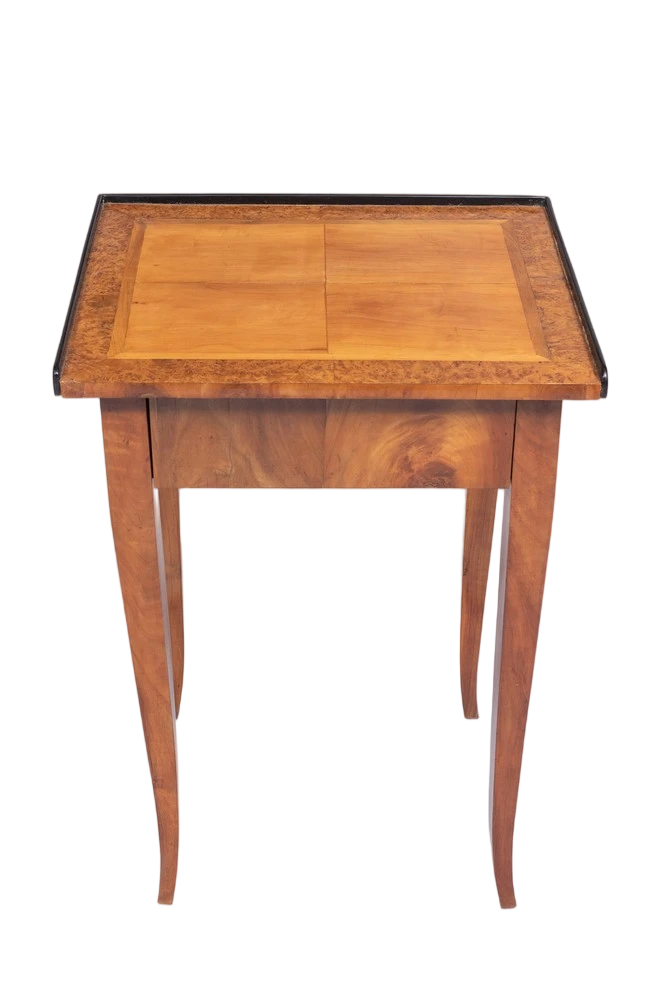
Upper Bavaria, circa 1820.
Solid cherrywood (saber legs) and veneered. Alder burl and walnut veneers.
Edging of the top in ebonized pearwood.
Concealed top drawer, running almost across the entire width of the furniture.
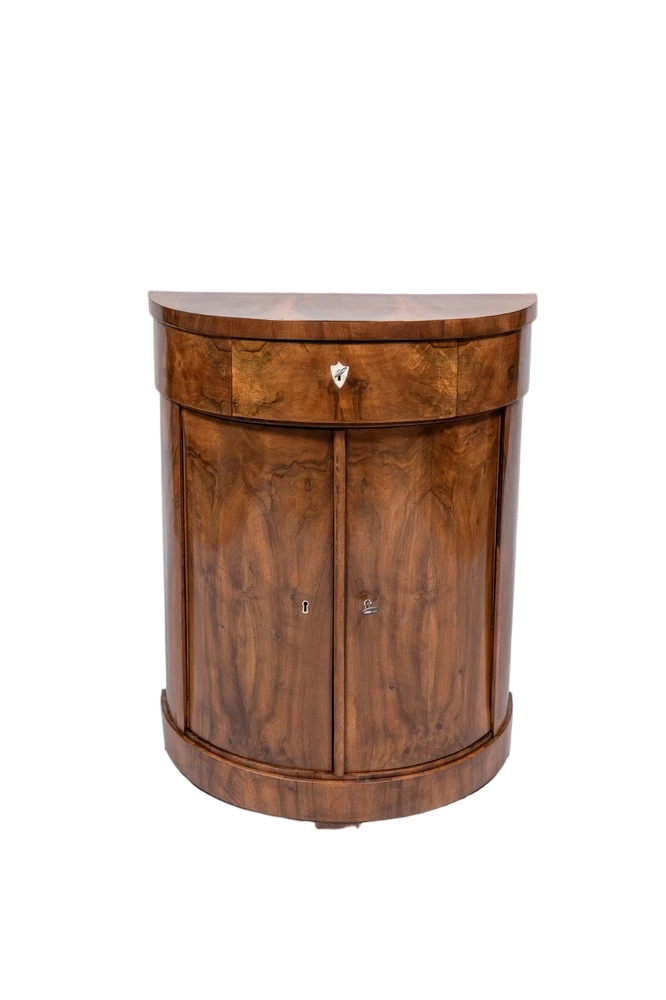
Central Germany, circa 1825/30.
Exquisitely veneered in walnut on a fine softwood body.
The cabinet retains its inaugural shelf.
Adorned with the inaugural bone escutcheon on the top drawer; the door’s escutcheon has been thoughtfully supplemented.
The locks have been expertly renewed to ensure continued functionality.
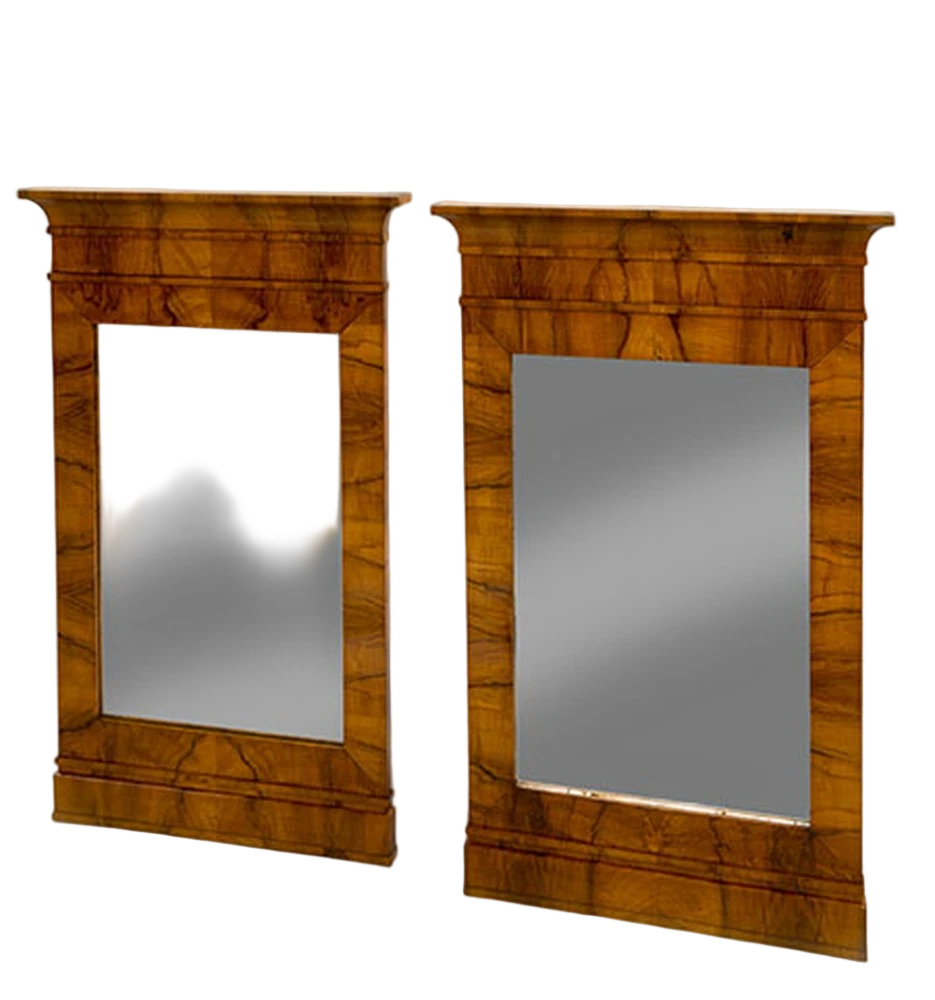
Central Germany, circa 1825.
Exquisitely veneered in walnut on a fine softwood body.
The mirror glass is historical, yet thoughtfully supplemented.
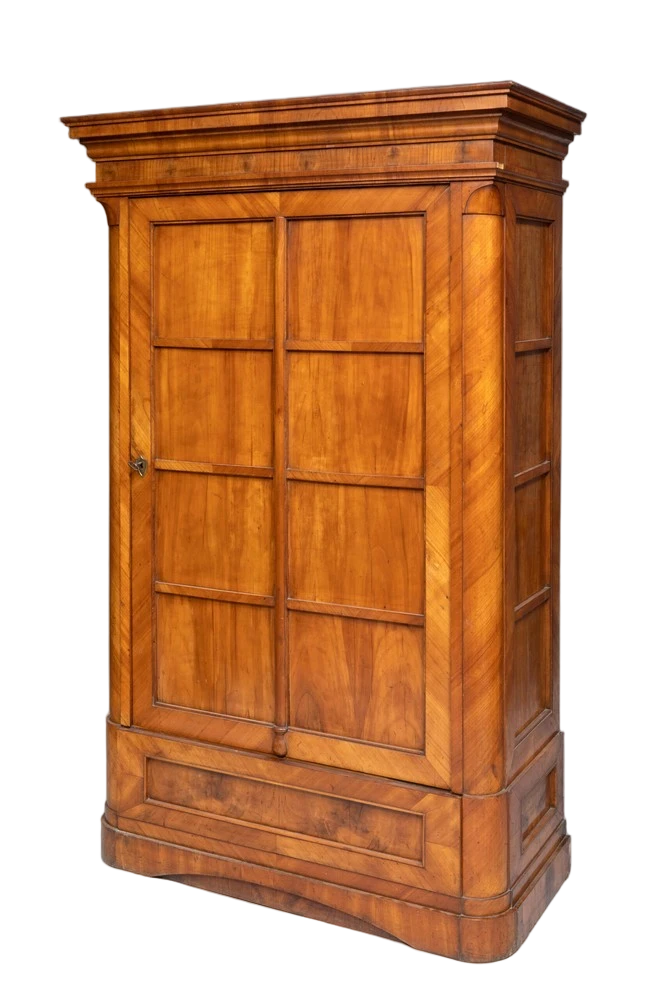
Saxony, circa 1825/30.
Exquisitely veneered in cherrywood on a softwood body, featuring sophisticated “corkscrew” style veneers on the inset columns.
The interior is equally refined, with sections expertly finished in cherrywood veneer.
The plinth contains a masterfully concealed, flush-mounted drawer.
The piece is accompanied by an elaborate original key, uniquely crafted with a head in the form of a closed hand.
Literature: This distinguished cabinet is illustrated in: Haaf, Rainer; Biedermeierwelten; Deutschland und Donaumonarchie, Leopoldshafen 2024, p. 169, fig. 576.
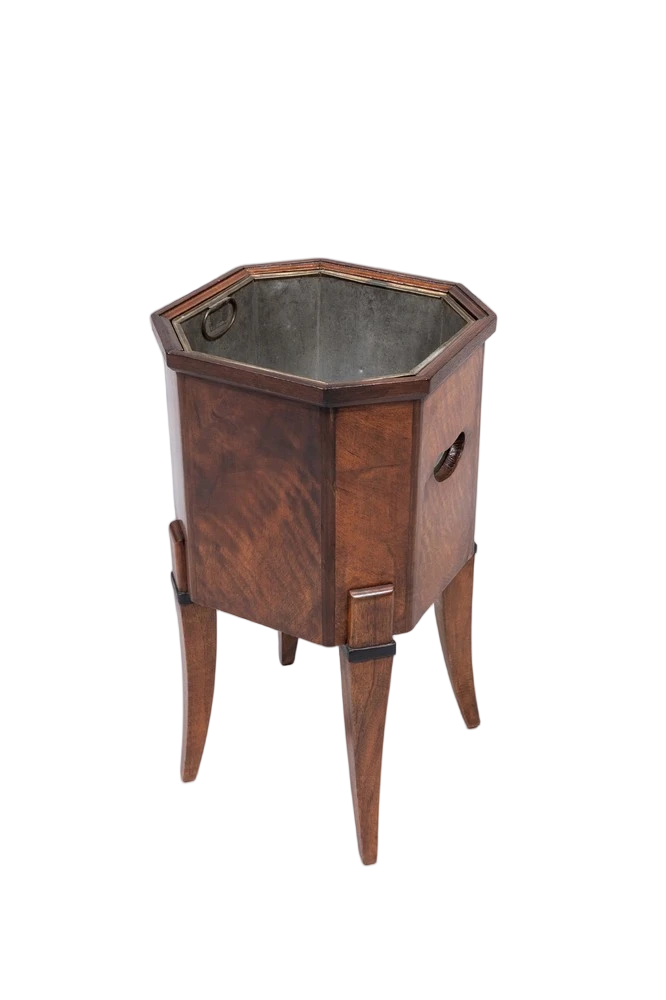
Likely Baden, circa 1820.
Exquisitely crafted from solid and veneered walnut. The blackened sections are expertly finished in ebonized pearwood.
The piece retains its original metal insert, elegantly finished with a brass edge binding.
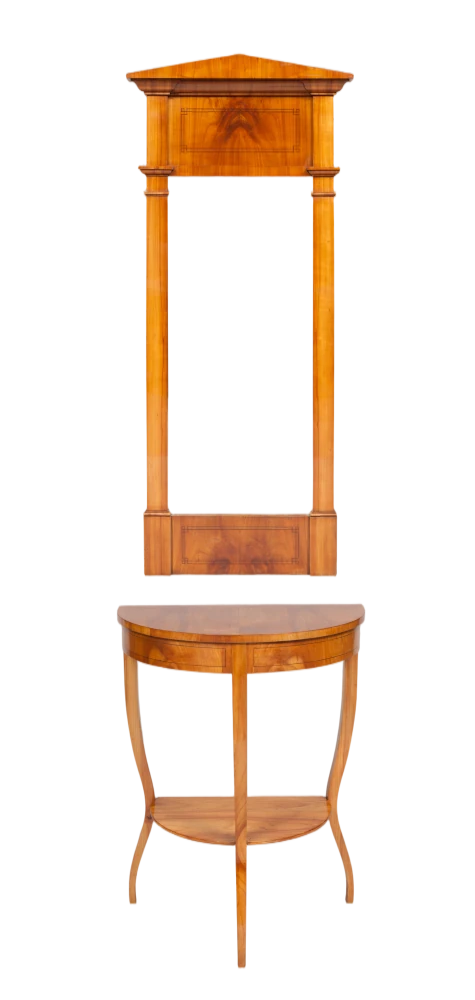
Preserved in its original condition.
Thuringia, circa 1820/25.
Exquisitely veneered in cherrywood and accented with ebonized wood thread inlays on a softwood body.
The ensemble features its original historical mirror glass.
Dimensions of the console:
Height: 76 cm
Width: 60 cm
Depth: 35 cm
Dimensions of the mirror:
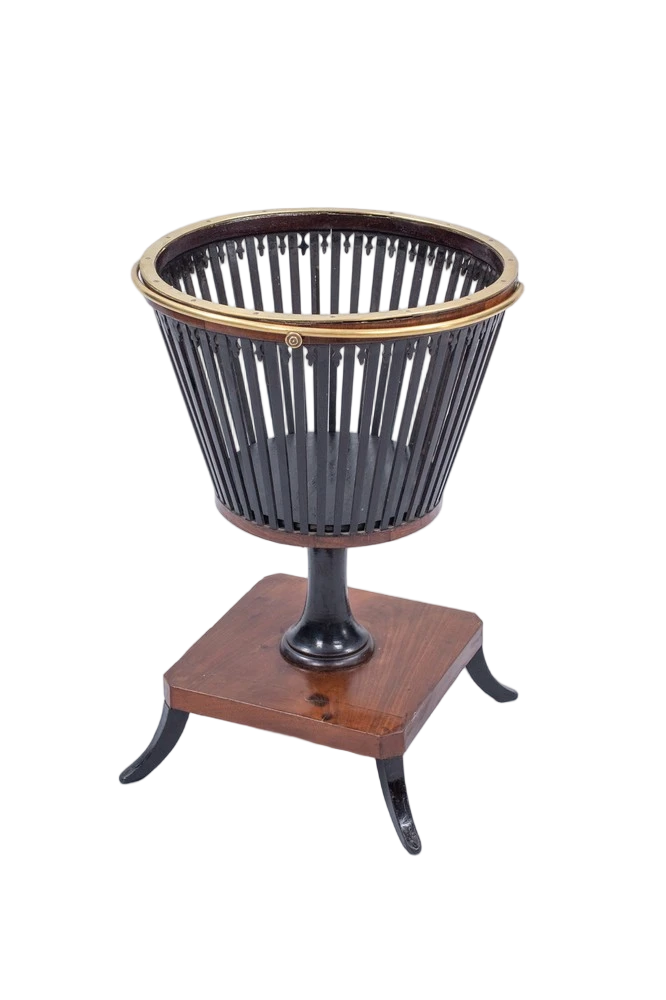
Preserved in its original condition.
Hamburg, circa 1820.
Exquisitely veneered in mahogany on a fine softwood body.
The basket features dainty openwork craftsmanship made from ebonized pearwood.
The feet and shaft are equally refined, crafted from ebonized pearwood.
Adorned with its original brass hoop and a movable handle.
Literature: Haaf, Rainer, Biedermeierwelten. Deutschland und Donaumonarchie; Leopoldshafen 2024, p. 428, fig. 1639.
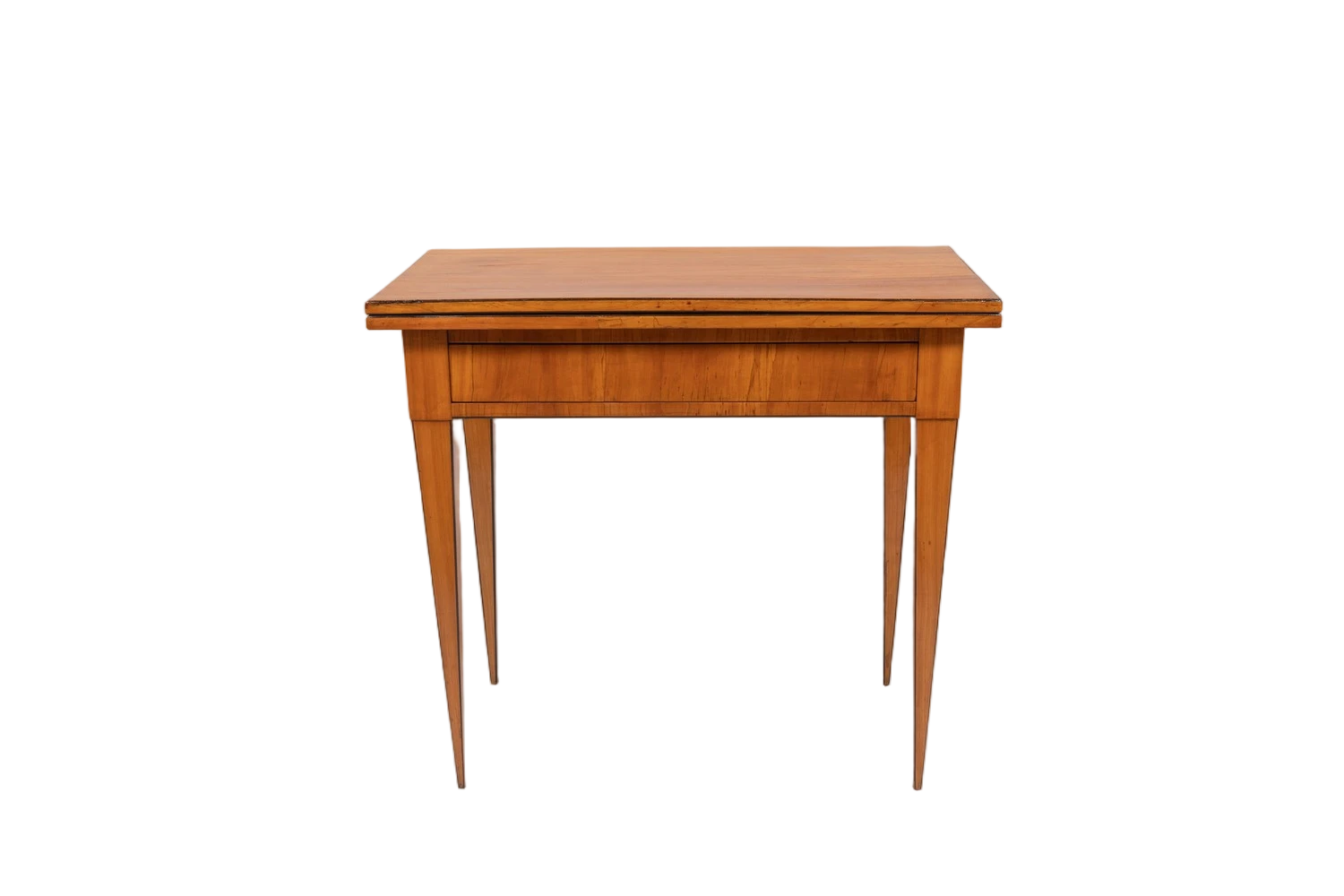
Court Cabinetmaker Daniel, Munich, circa 1820.
Crafted from cherrywood, veneered on softwood. Fine bog oak band inlays adorn the piece on all sides.
This exquisite furniture features a drawer elegantly recessed into the front. An extendable pull-out section reveals a hinged, felt-covered playing surface. The felt covering has been professionally renewed.
Original hinges attest to the authenticity of the folding mechanism.
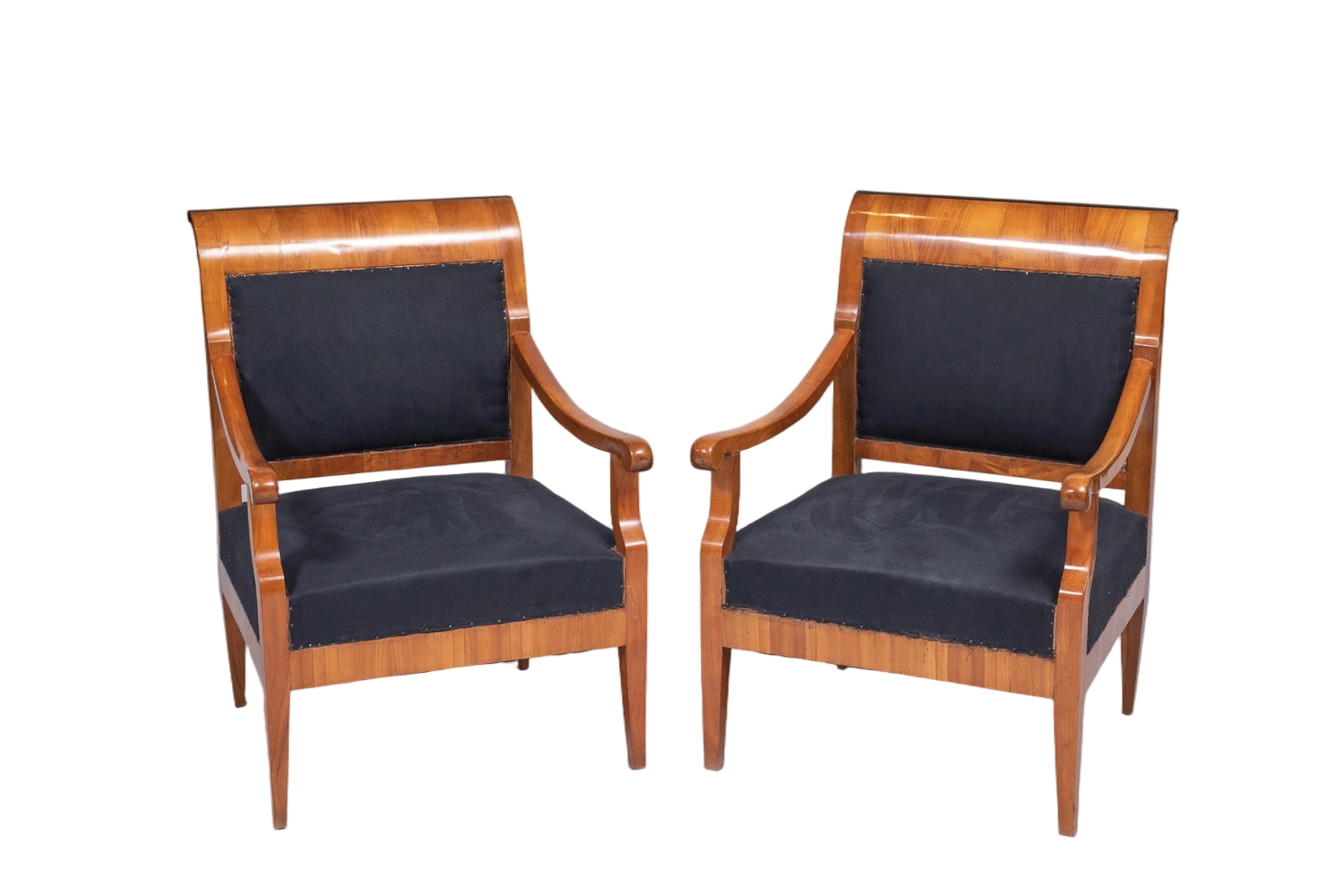
Munich, circa 1820.
Exquisitely veneered in cherrywood on a fine softwood body, featuring sophisticated vertical grain patterns.
The legs and backrest supports are masterfully crafted from solid cherrywood.
Presented in an under-upholstered condition, finished with black muslin.
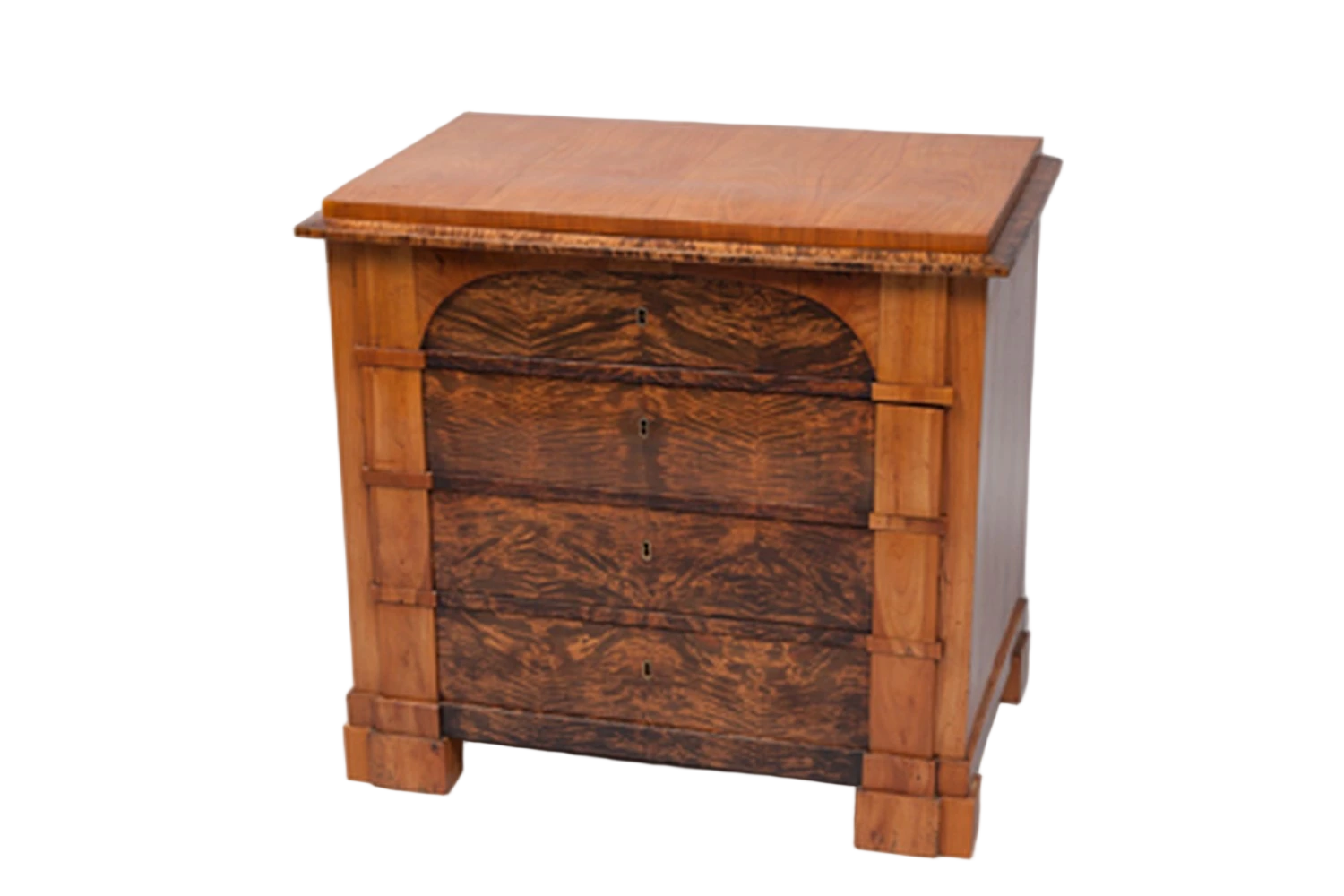
Thuringia, circa 1825.
Exquisitely veneered in cherrywood and dark-stained fiddleback maple on bodies of softwood and poplar.
The inaugural cherrywood block feet feature partial historical supplements.
The piece retains its authentic locks.
Product ID:
