Catalog: General

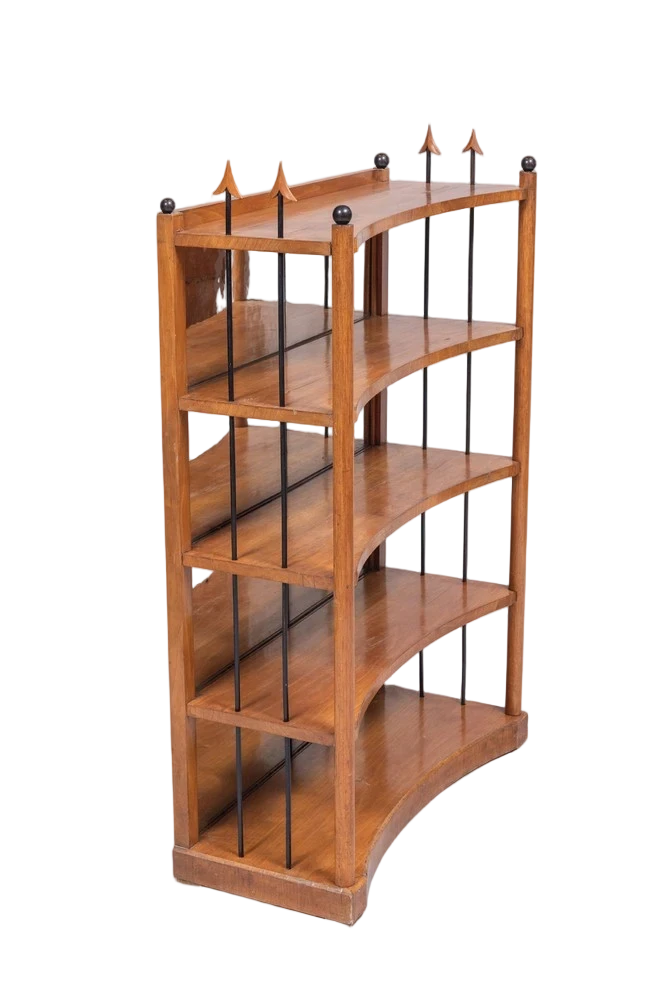
  • An exceptional, concave-designed Biedermeier étagère.

    An exceptional, concave-designed Biedermeier étagère.

    Vienna, circa 1825/30.

    Design and execution presumably by Joseph Ulrich Danhauser and his manufactory.

    Exquisitely veneered in walnut on a softwood body. The original arrows and decorative spheres are crafted from solid pearwood, partially ebonized.

    The piece retains its original back panel.

    Authentic historical mirroring.

    Cf. design drawing by Danhauser for comparable étagère featuring arrow-shaped decorative struts and dark finial spheres: ‘Nottenstelle No. 11’, (music stand), inventory number KI 8971-1474, Museum of Applied Arts (MAK), Vienna.
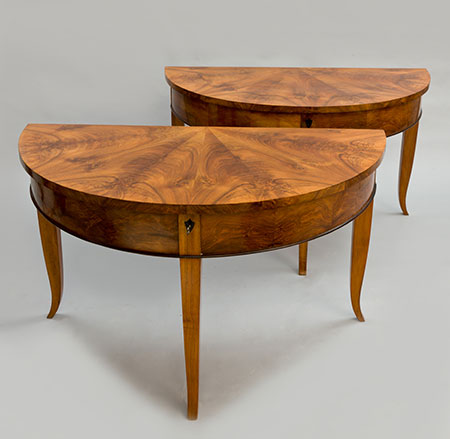
  • A refined pair of crescent-shaped Biedermeier console tables, designed to be elegantly combined as a grand circular table.

    A refined pair of crescent-shaped Biedermeier console tables, designed to be elegantly combined as a grand circular table.

    Baden, circa 1825.

    Exquisitely crafted from solid walnut and fine walnut veneers. The table surfaces feature a sophisticated star-shaped veneer pattern, accented by blackened pearwood half-rod moldings.

    The table tops are hinged and lockable, revealing original Biedermeier-era wallpaper preserved within the interior.

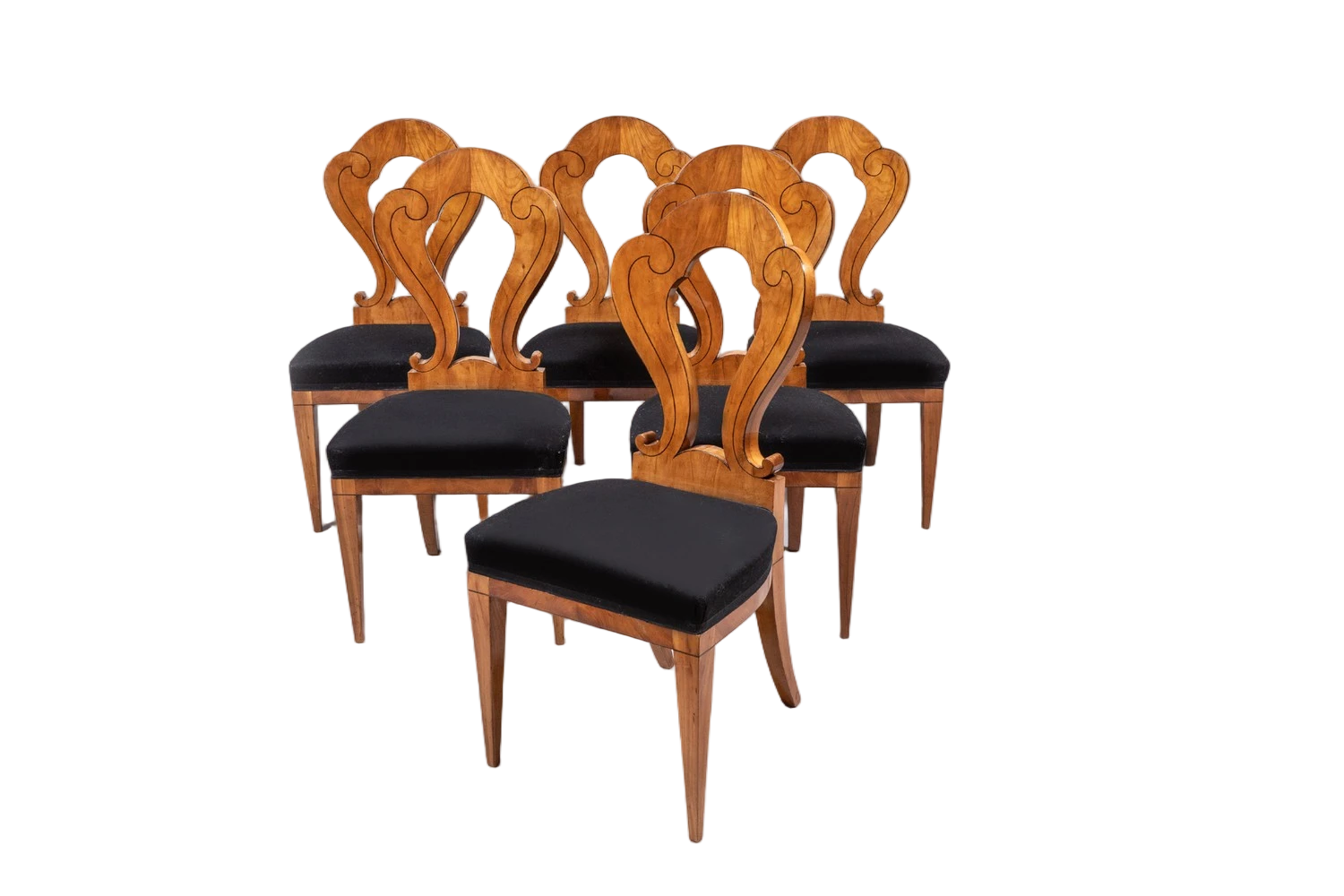
  • A set of six balloon-back chairs, presented in a preserved historical condition.

    A set of six balloon-back chairs, presented in a preserved historical condition.

    Designed and executed by the esteemed Danhauser Manufactory, Vienna, circa 1830.

    The design largely corresponds to Joseph Ulrich Danhauser’s chair model number “19”.

    Exquisitely veneered in cherrywood on a beechwood body.

    The piece features sophisticated, all-around inlaid bandings of blackened wood.

    The upholstery has been thoughtfully renewed, with the sub-upholstery finished in black calico fabric.

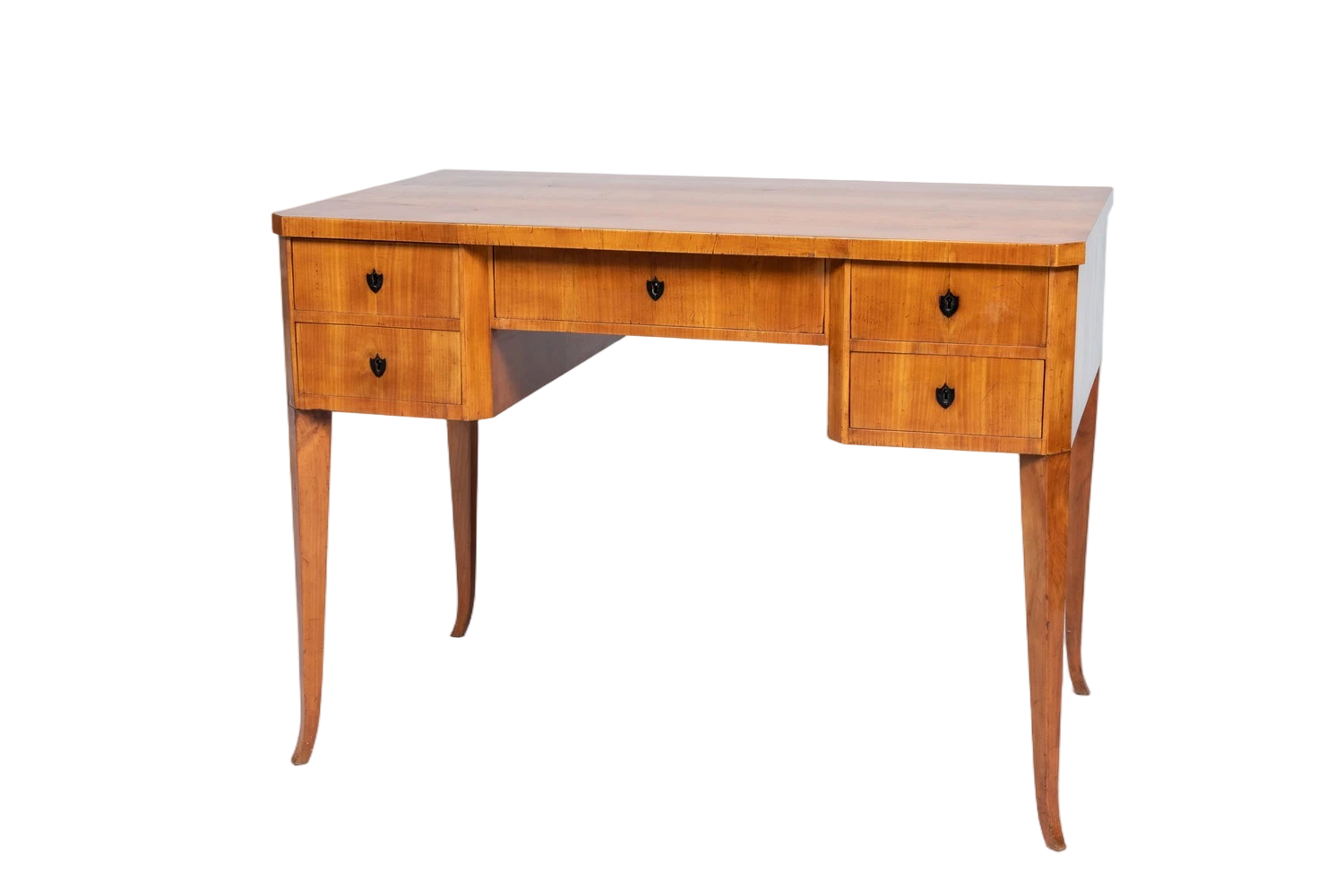
  • Elegant, Slender, and Freestanding Biedermeier Desk.

    Elegant, Slender, and Freestanding Biedermeier Desk.

    Southern Germany, circa 1830.

    Veneered in cherrywood on maple and softwood.

    The original legs are crafted from solid cherrywood.

    Five lockable drawers with original mortise locks.

    Literature: The desk described above is illustrated in Haaf, Rainer; Biedermeierwelten. Deutschland und Donaumonarchie, Leopoldshafen 2024, p. 225, fig. 796.

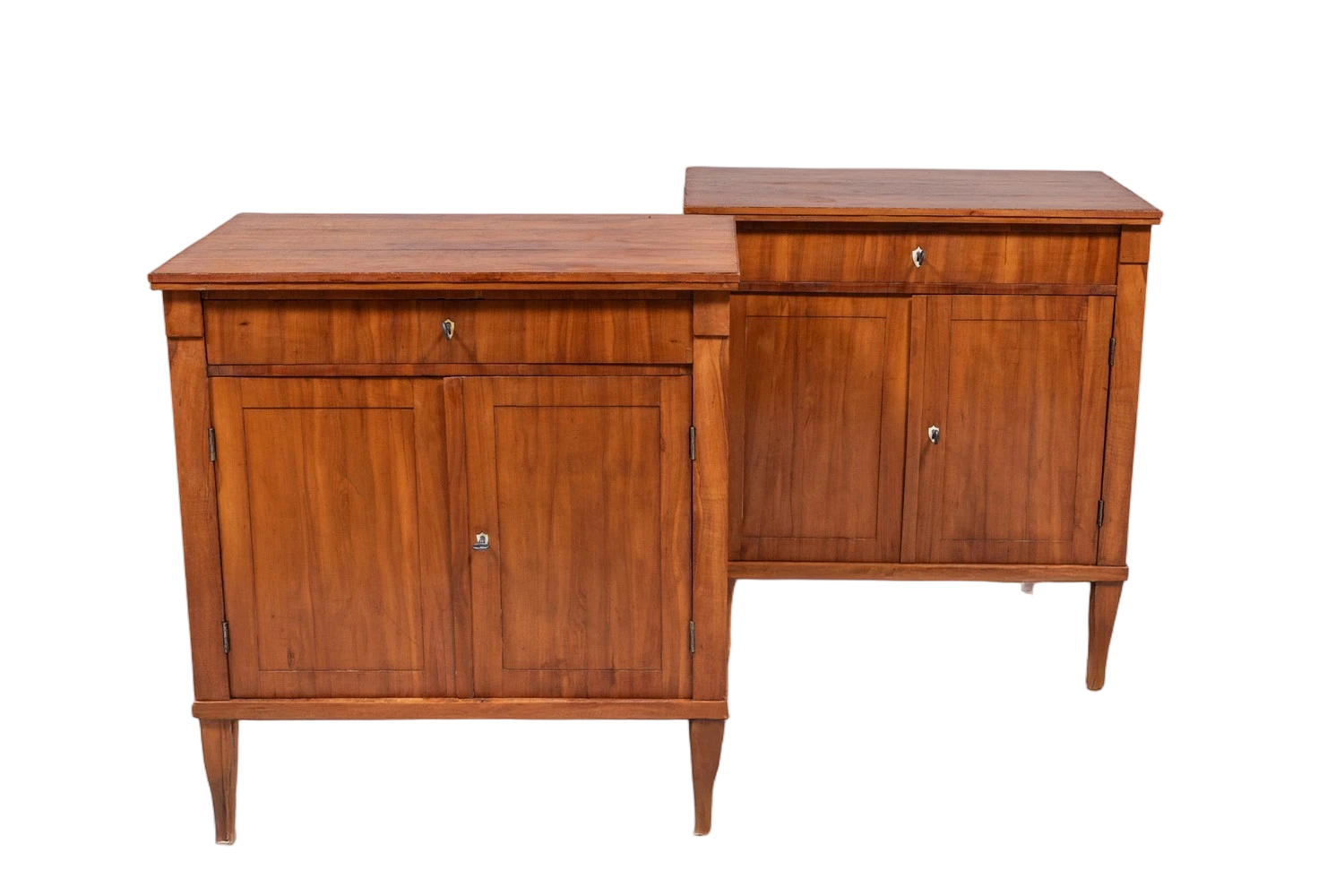
  • A pair of dainty Biedermeier half-cabinets.

    A pair of dainty Biedermeier half-cabinets.

    Central Germany, circa 1830.

    Exquisitely veneered in pearwood on a body of softwood and alder (doors). Sections are crafted from solid pearwood.

    Standing on original, solid pearwood tapered legs.

    The bone inlaid escutcheons have been supplemented.

    The lower sections retain their inaugural internal shelves.

    The doors are equipped with original espagnolette locks finished with brass cover plates.

    Note: The piece is shown prior to its final high-polish finish.

    Literature for comparison: A very similar piece in terms of style and design—in that case a dressing cabinet, also crafted from pearwood and attributed to the Hoffmann Manufactory in Leipzig—is illustrated in: Sulzbacher, Michael; Atzig, Peter, Friedrich Gottlob Hoffmann, catalogue for the exhibition: “Exquisite Cabinetwork from Leipzig. F. G. Hoffmann—Court Cabinetmaker and Entrepreneur,” 29 November 2014 – 12 April 2015. Dresden 2014, p. 231 (fig.).

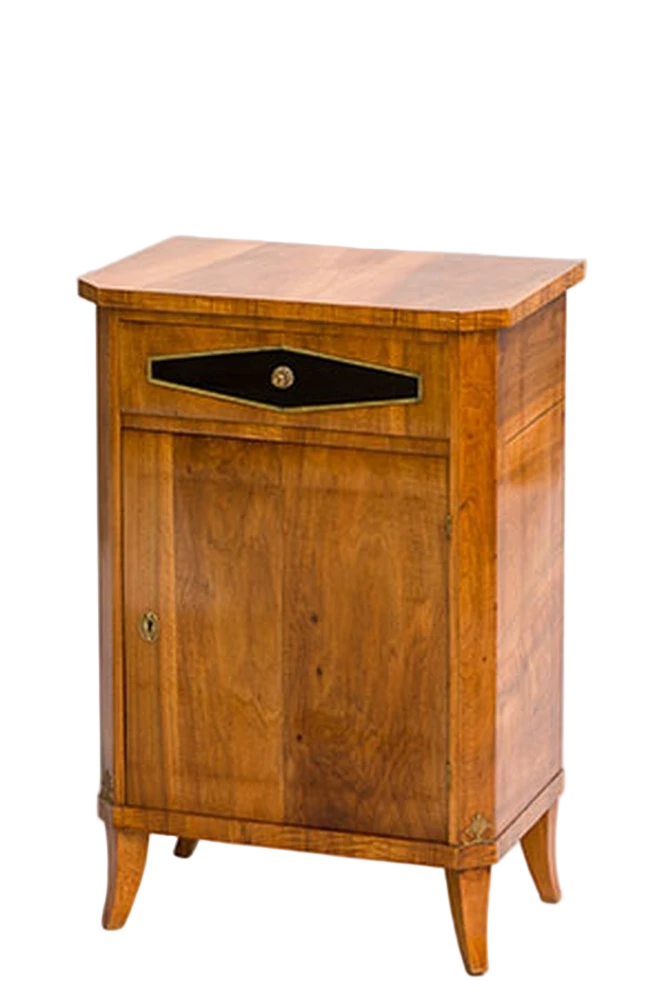
  • A dainty and refined pillar cabinet.

    A dainty and refined pillar cabinet.

    Central Germany, circa 1815.

    Exquisitely veneered in walnut on a fine softwood body. The design is accented by a diamond-shaped ebonized veneer section, elegantly framed by brass-clad moldings.

    The brass applications in the plinth area are original, as is the pull knob of the plinth drawer. The door hardware and lock have been thoughtfully supplemented.

    The cabinet stands on its original feet.

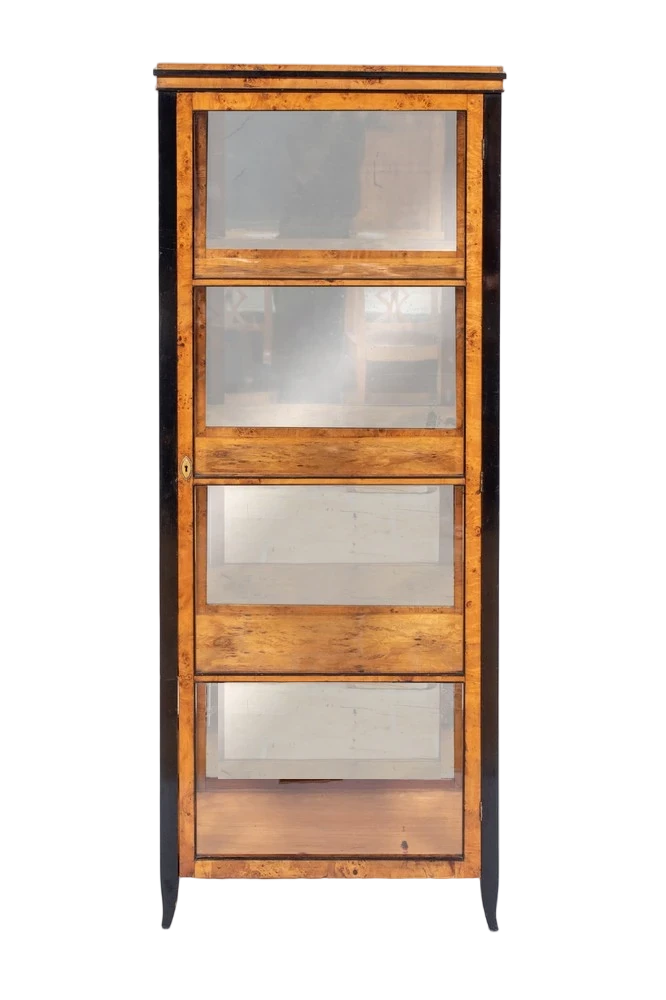
  • A dainty Biedermeier vitrine, featuring glazing on three sides and a sophisticated mirrored interior.

    A dainty Biedermeier vitrine, featuring glazing on three sides and a sophisticated mirrored interior.

    Baltic region, circa 1830.

    Exquisitely veneered in bird’s eye birch on a softwood body.

    The blackened elements are masterfully ebonized, likely from maple wood.

    The piece retains its predominantly original glazing and mirroring. The back panel elements have been thoughtfully supplemented with historical wood to maintain its authentic character.

    The lock and escutcheon have been elegantly replaced.

  • A slant-front bureau, attributed to the court cabinetmaker Daniel’s workshop in Munich.

    A slant-front bureau, attributed to the court cabinetmaker Daniel’s workshop in Munich.

    Munich, circa 1815.

    Exquisitely veneered in cherrywood and ebony (escutcheons) on a fine softwood body. The interior of the writing flap is elegantly blackened (ebonized). The interior fittings are masterfully crafted from solid alder wood.

    Complete with the original lock for the writing flap and its inaugural key. The drawer locks have been thoughtfully renewed.

×

Product ID:

Inquiry