


Likely Mainz, circa 1825.
Exquisitely veneered in cherrywood on a fine softwood body.
The piece retains its original locks and keys.
Accompanied by its authentic internal shelf.
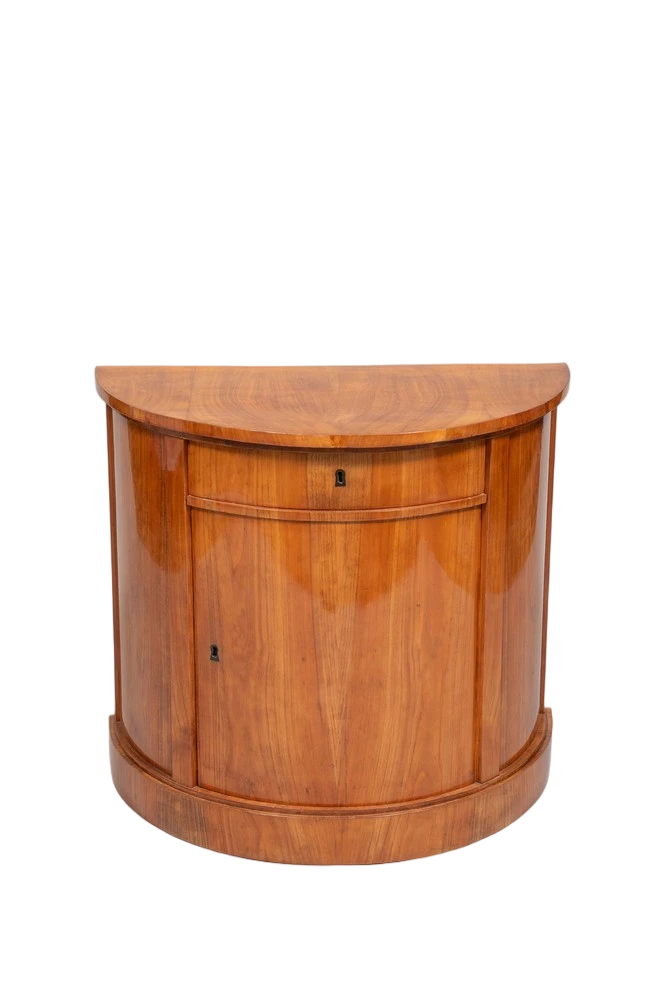
Likely Mainz, circa 1825.
Exquisitely veneered in cherrywood on a fine softwood body.
The piece retains its original locks and keys.
Accompanied by its authentic internal shelf.
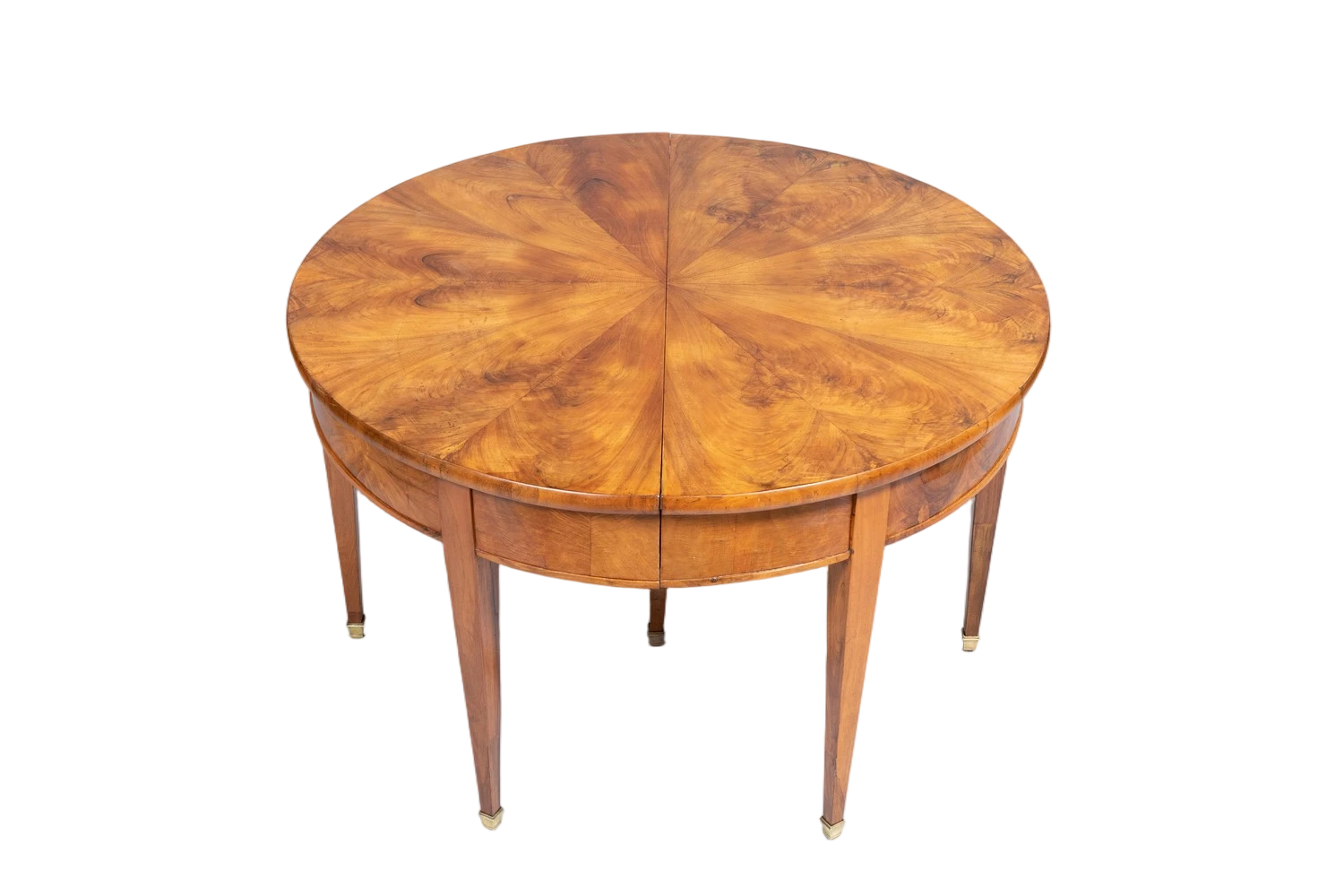
Baden, circa 1830.
Exquisitely grained walnut, partially star-patterned and book-matched, veneered on softwood. Original, solid oak extension system. Authentic brass caps on the legs.
Extendable to total approx. 4.95 meters. Currently Two extension leaves à 0.73 m available, hence extendable to 2.72 m. Additional extension leaves can be custom-made.
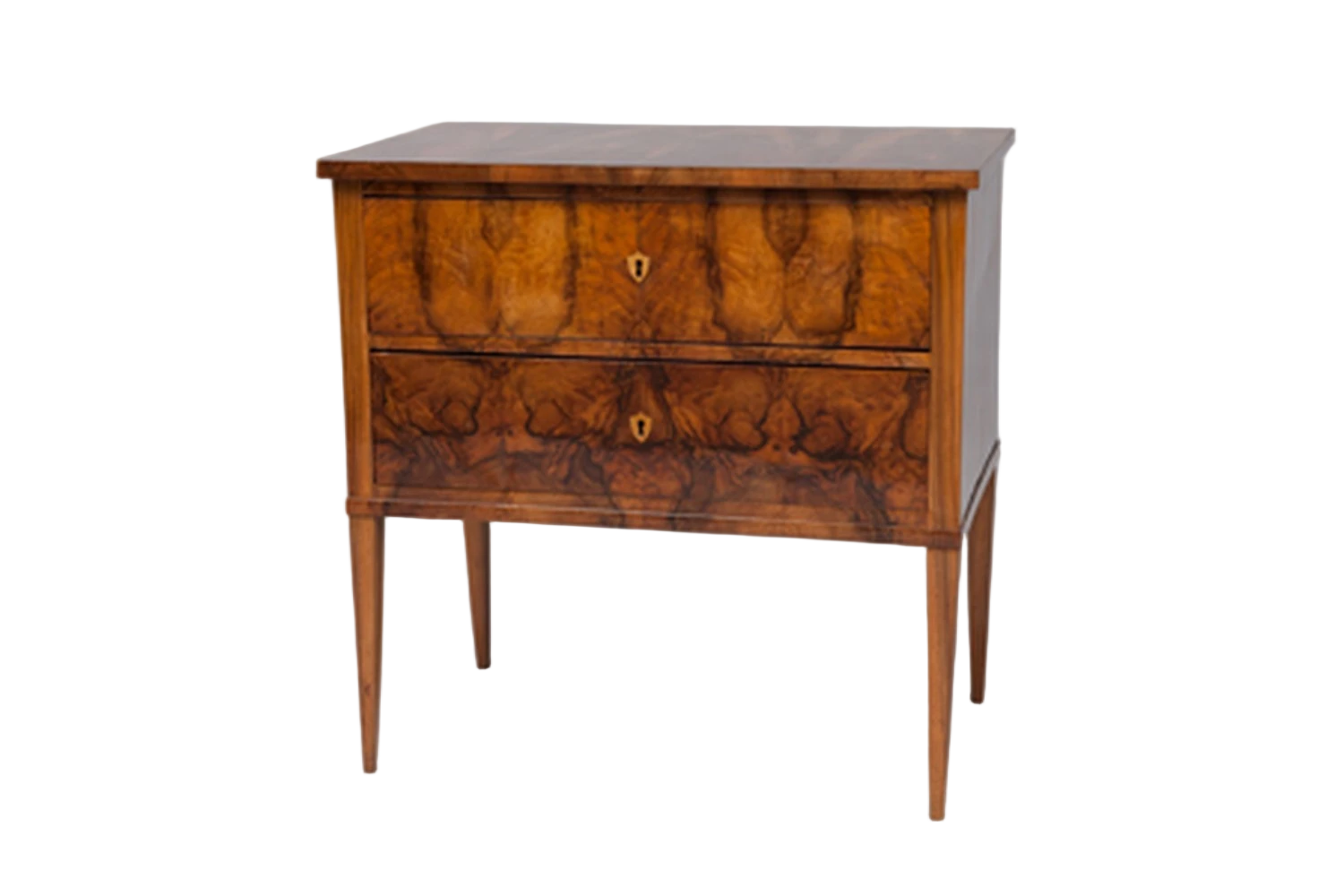
Hesse, circa 1820.
Exquisitely veneered in walnut and maple (escutcheons) on a fine softwood body. Standing on its original feet.
The locks have been thoughtfully supplemented.
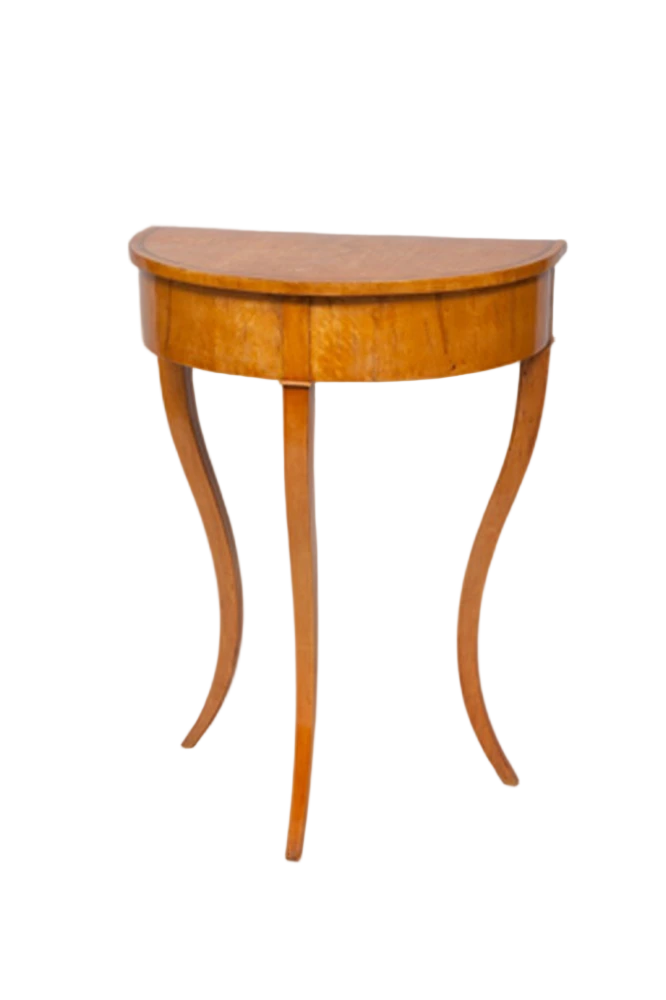
Thuringia, circa 1825.
Exquisitely veneered in birch wood on a fine softwood body. The top is adorned with a sophisticated double inlay of deep-dyed wood.
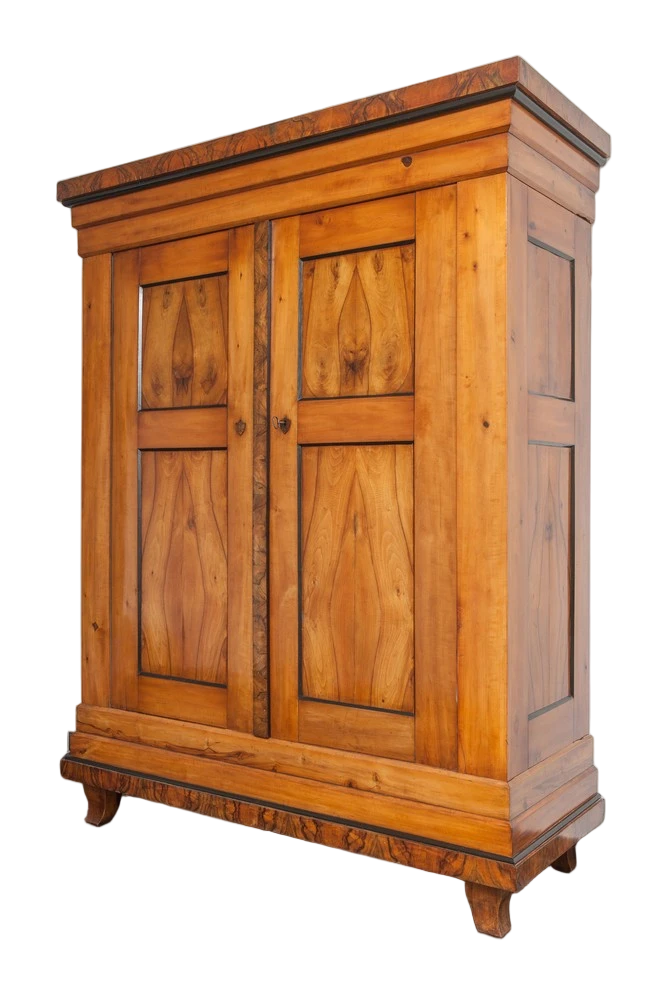
Swabia, circa 1825.
Crafted from solid pearwood, ebonized pearwood, and solid walnut. The door and side panels feature exquisite, symmetrically joined walnut wood.
The piece retains its original feet and interior fittings.
The inaugural lock remains preserved with its authentic key.
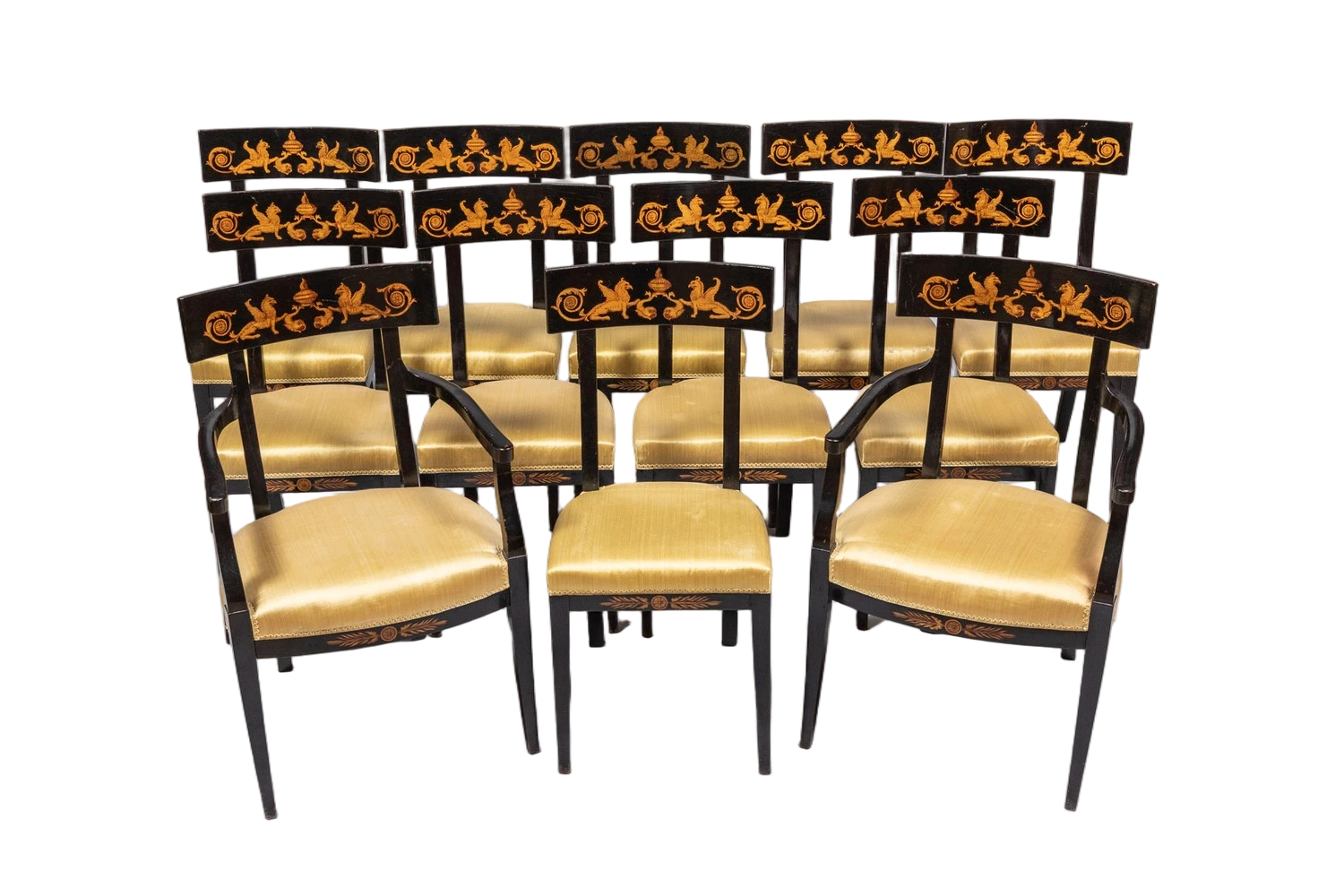
Maintained in their original condition, with the majority of the authentic upholstery preserved.
Danube Monarchy, circa 1825/30.
Masterfully crafted from solid pearwood.
Adorned with original black lacquer and exquisite gold painting.
The set predominantly features its original upholstery, now presented with a later-added outer fabric.
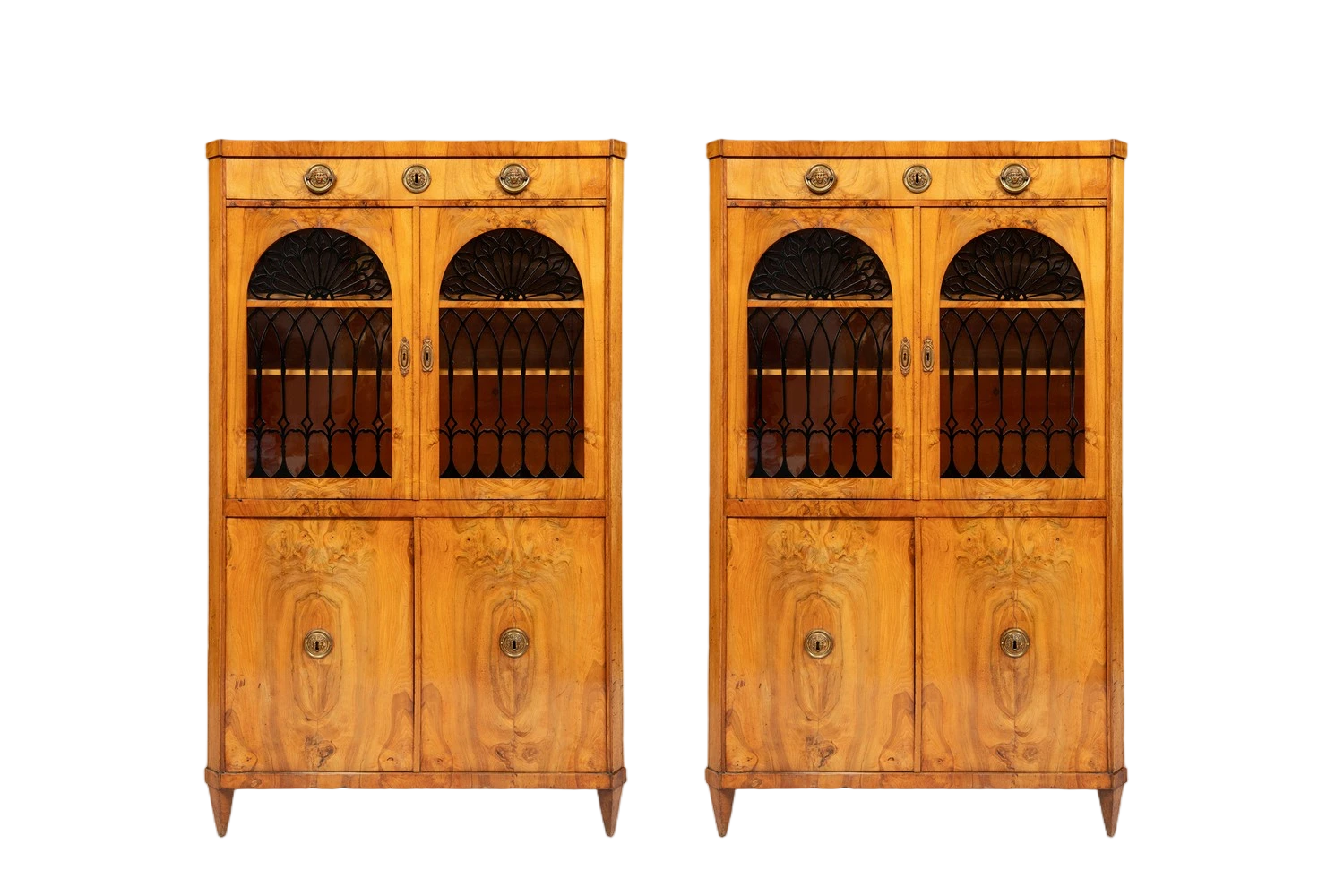
Austria, circa 1825/30.
Exquisitely veneered in walnut and maple (featured in the interior of the display sections) on a fine softwood body.
The elegant glazing bars of the doors are crafted from ebonized maple, with the blackened areas partially and daintyly preserved.
The cabinets retain their original shelves.
Adorned with their original brass fittings and handles.
The glazing remains predominantly authentic.
Provenience: As evidenced by two historical collection labels on the underside of the plinths, these cabinets were once the property of the esteemed restorer and painter Baroness Rosa von Guttenberg (born 1878 in Trieste, died 1959 in Graz, Lessingstrasse 8).
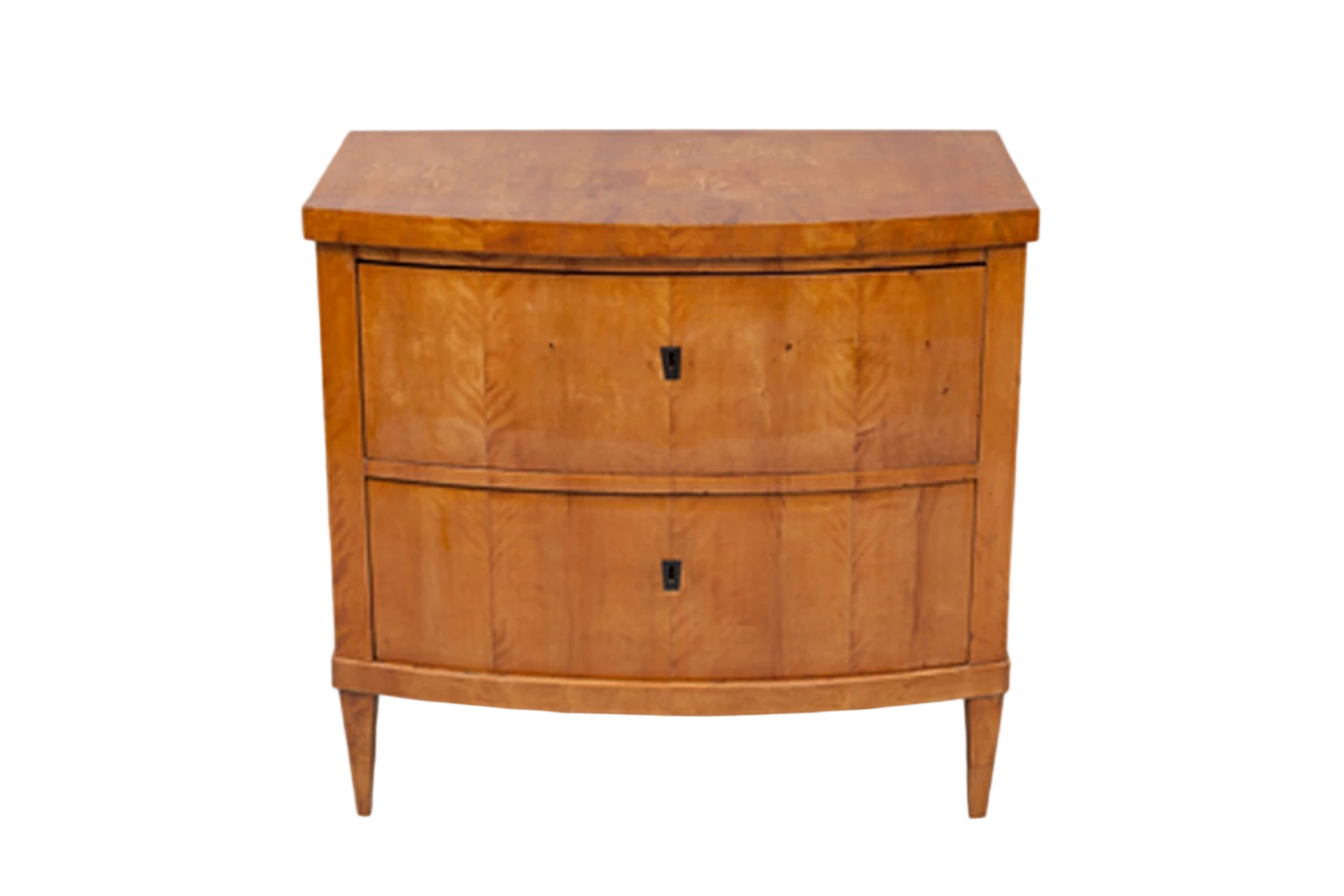
Central Germany, circa 1820.
Exquisitely veneered in birch wood on a fine pine body.
The piece retains its inaugural locks and original feet, the latter featuring partial historical reinforcements (anschuhung).
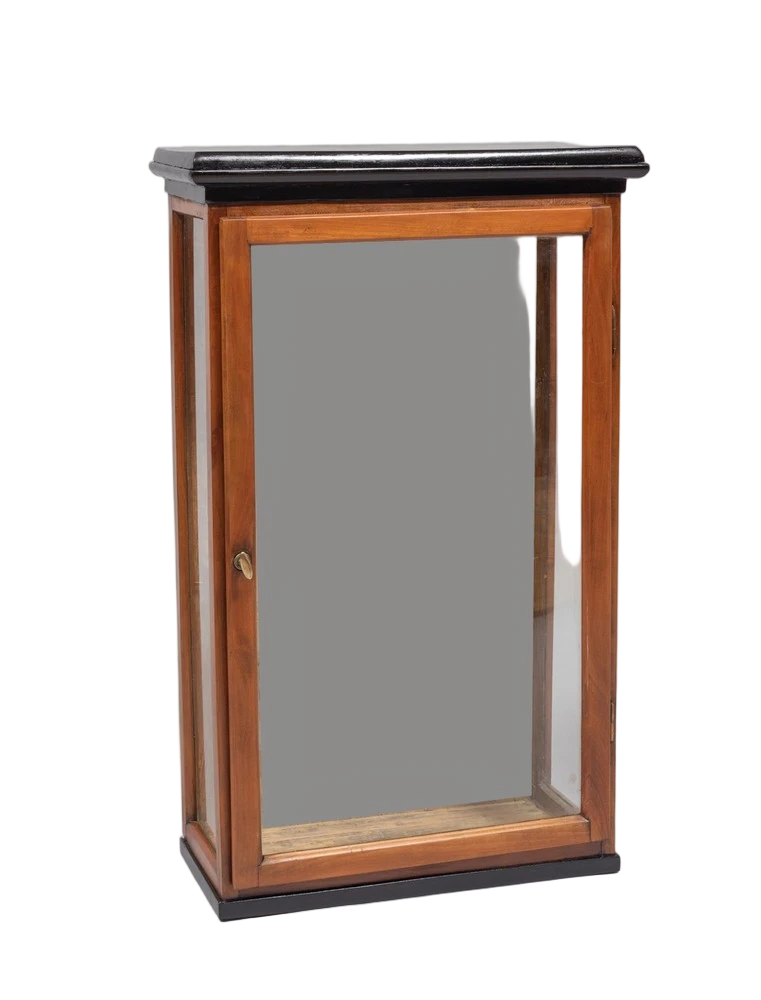
Southern Germany, circa 1830.
Crafted from solid cherrywood, with refined accents in ebonized pearwood.
The cabinet features later-added glass shelves with elegantly ground edges.
Adorned with its original brass rotating knob and authentic brass hinges.
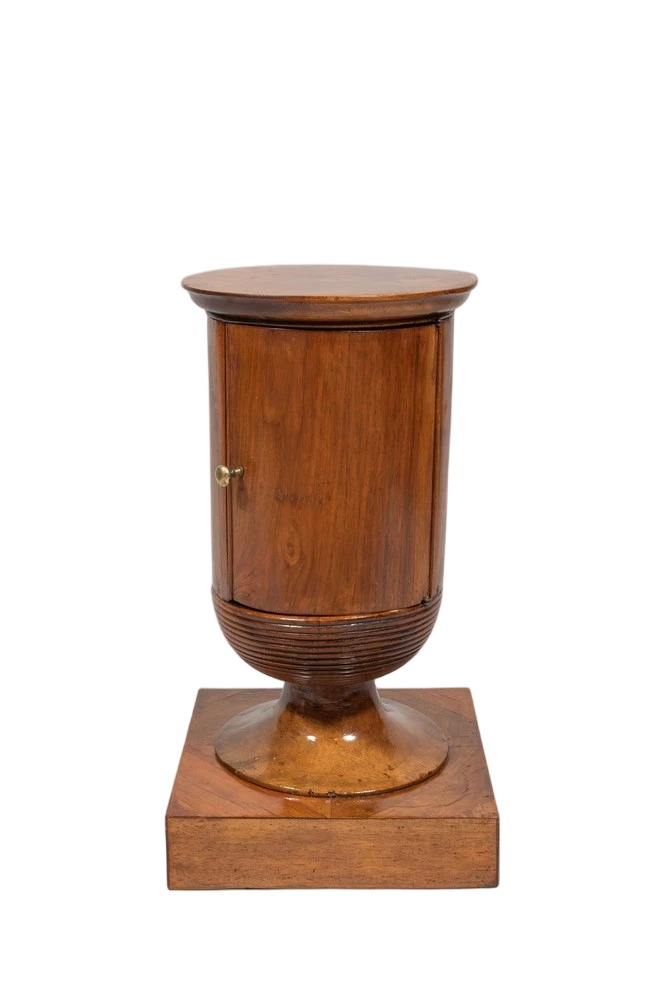
Southwest Germany (Baden) or France, circa 1830.
Exquisitely veneered in walnut on a poplar wood body.
The top is masterfully crafted from solid walnut.
Complete with its original brass rotating knob.
Product ID:
