


Southern Lower Saxony, circa 1830.
Exquisitely veneered in ash wood on a fine softwood body. The piece retains its inaugural locks.
The feet have been thoughtfully supplemented.
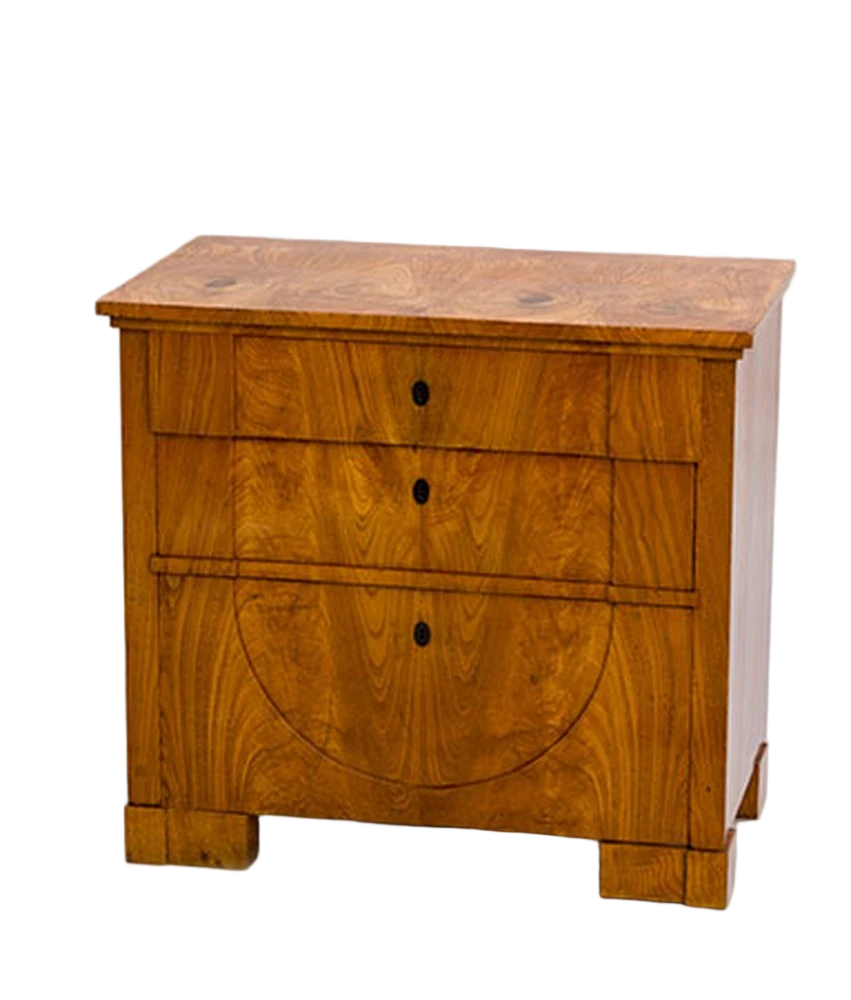
Southern Lower Saxony, circa 1830.
Exquisitely veneered in ash wood on a fine softwood body. The piece retains its inaugural locks.
The feet have been thoughtfully supplemented.
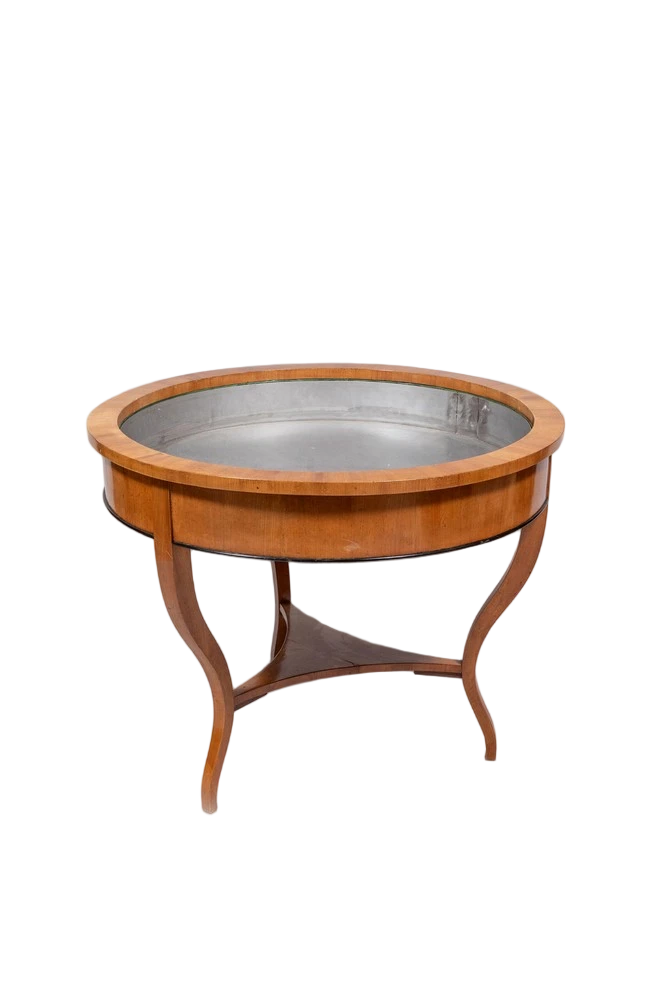
Southern Germany, circa 1820.
Exquisitely veneered in cherrywood on a softwood body, with sections crafted from solid cherrywood.
The interior well was originally lined with sheet metal and featured a drainage system. The piece is now thoughtfully accompanied by a newly fabricated insert made of stainless steel.
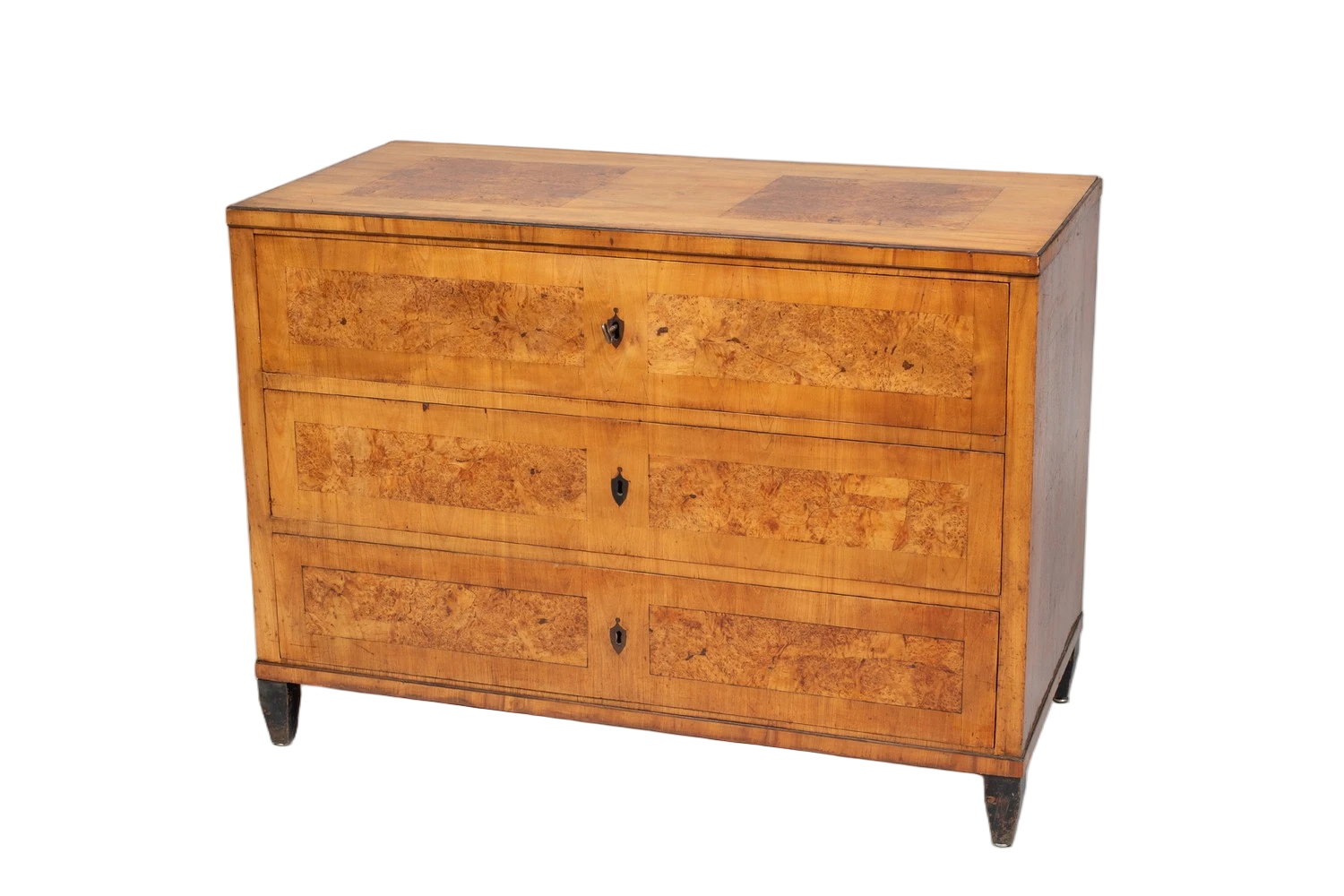
Likely from the court cabinetmaker Daniel’s workshop, Munich, circa 1820.
Exquisitely veneered in cherrywood and alder burr wood (panel fields) on a fine softwood body.
The visible moldings and the edge of the top surface are refined with blackened band inlays.
Standing on its original, ebonized tapered legs.
Complete with authentic inset escutcheons crafted from dark-stained wood, presumably pearwood.
The piece retains its original locks and one inaugural key.
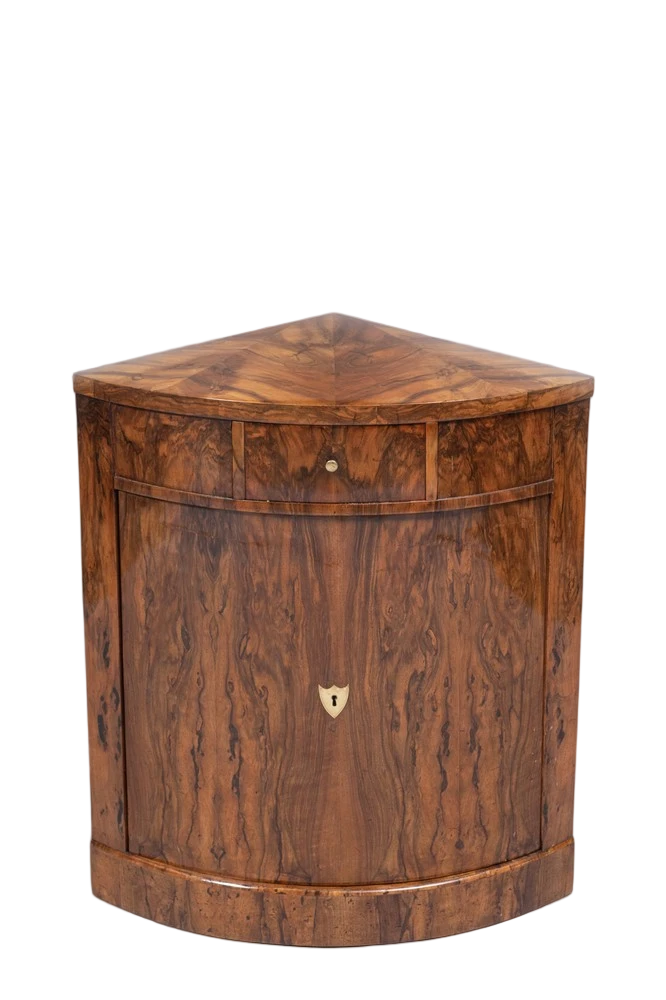
Westphalia, circa 1825.
Exquisitely veneered in walnut and walnut burr on a fine softwood body.
The cabinet retains its original internal shelf.
The door is equipped with its inaugural, elaborately crafted espagnolette lock.
The pull knob and hardware date from the period of the furniture’s creation, though they have been thoughtfully supplemented.
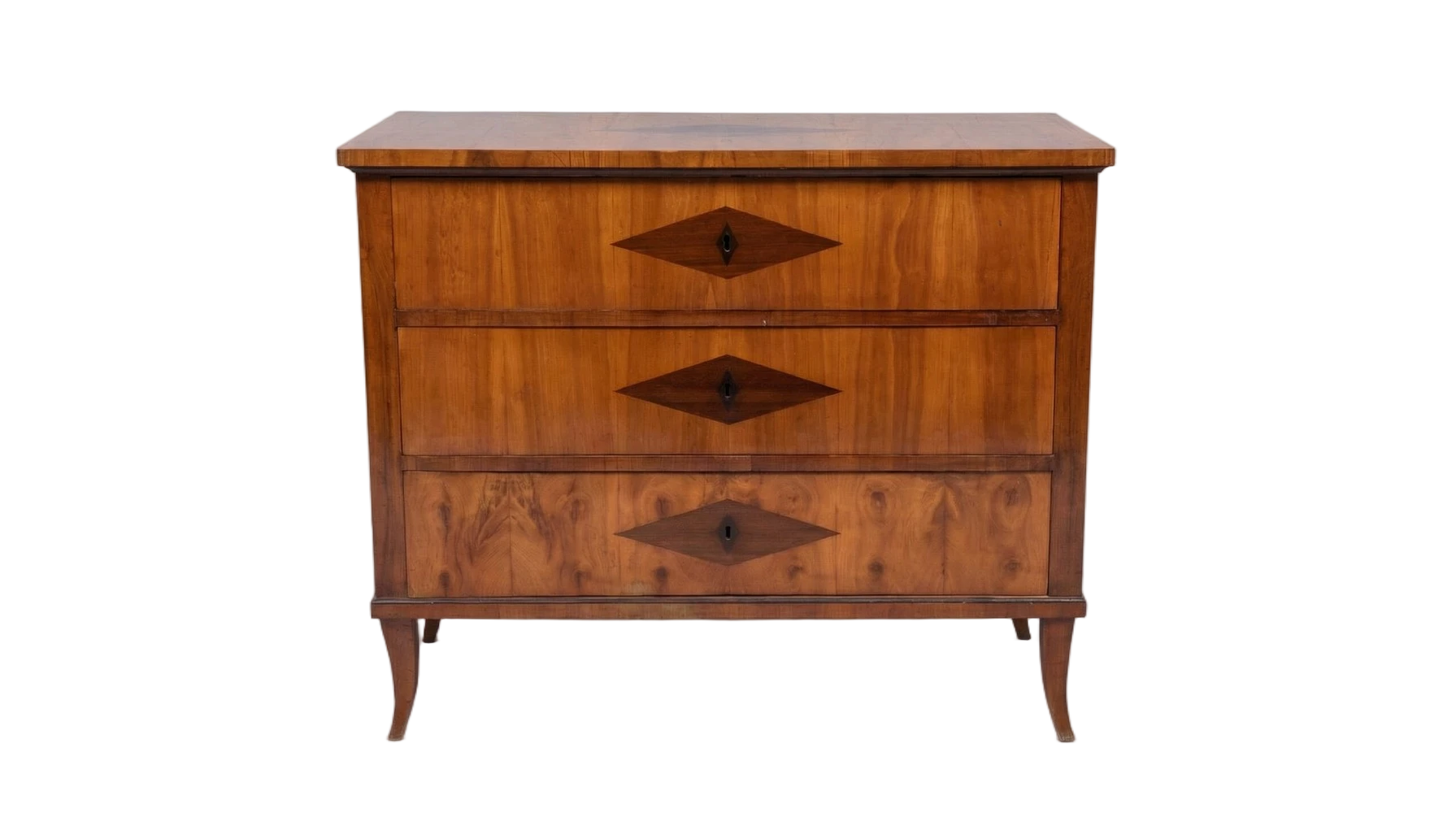
Upper Bavaria, circa 1820.
Exquisitely veneered in cherrywood and wenge on a fine softwood body.
Standing on its original, splayed tapered feet crafted from solid cherrywood.
Complete with its inaugural locks and two authentic steel-cut keys.
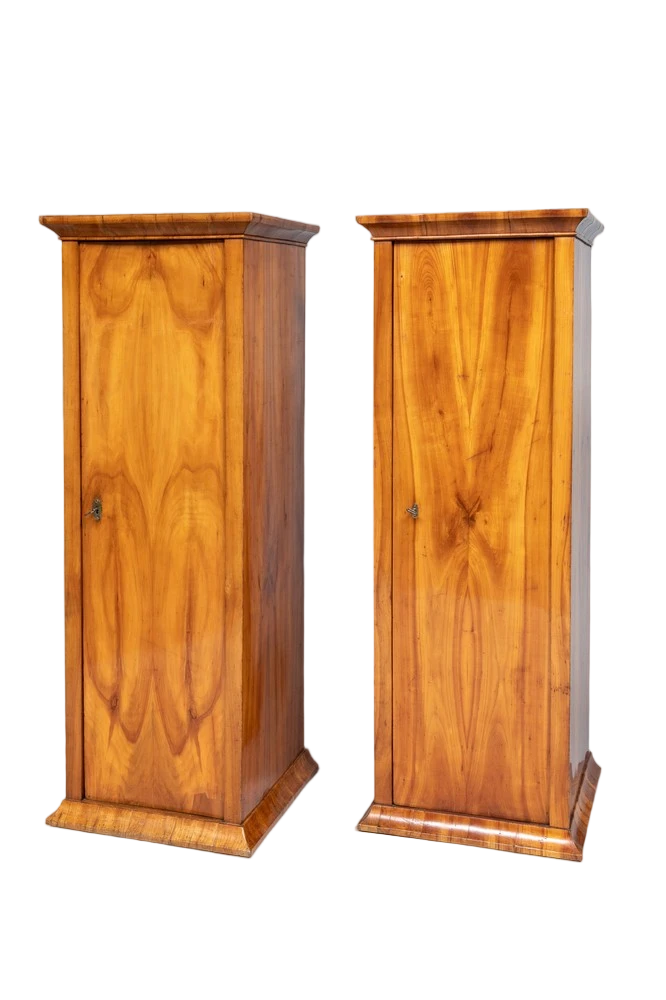
Southern Germany, circa 1825.
Walnut veneer on a softwood carcass. Elegant ebonized inlays.
Original porcelain knobs.
Literature for comparison: These cabinets are illustrated in: Haaf, Rainer, Biedermeier-Welten. Deutschland und Donaumonarchie, Leopoldshafen 2024, p. 100, fig. 299.
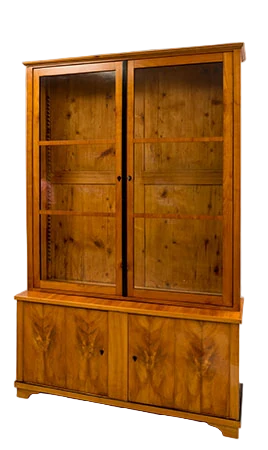
Exquisitely veneered in cherrywood on a softwood body, with refined accents in ebonized pearwood.
The cabinet stands on restored feet and retains its magnificent original glazing.
The interior showcases authentic shelving and meticulously arranged compartments.
The locks are predominantly original, ensuring the historical integrity of this fine piece.
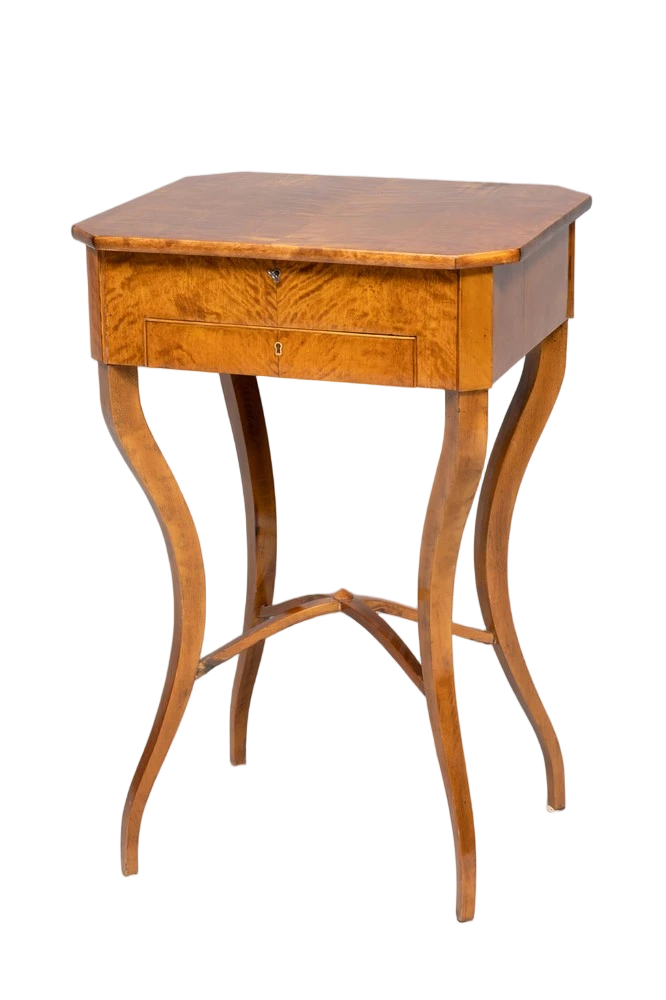
Central Germany, circa 1830.
Exquisitely veneered in birch wood on a fine softwood body.
Complete with its original lock.
Depth: 42 cm.
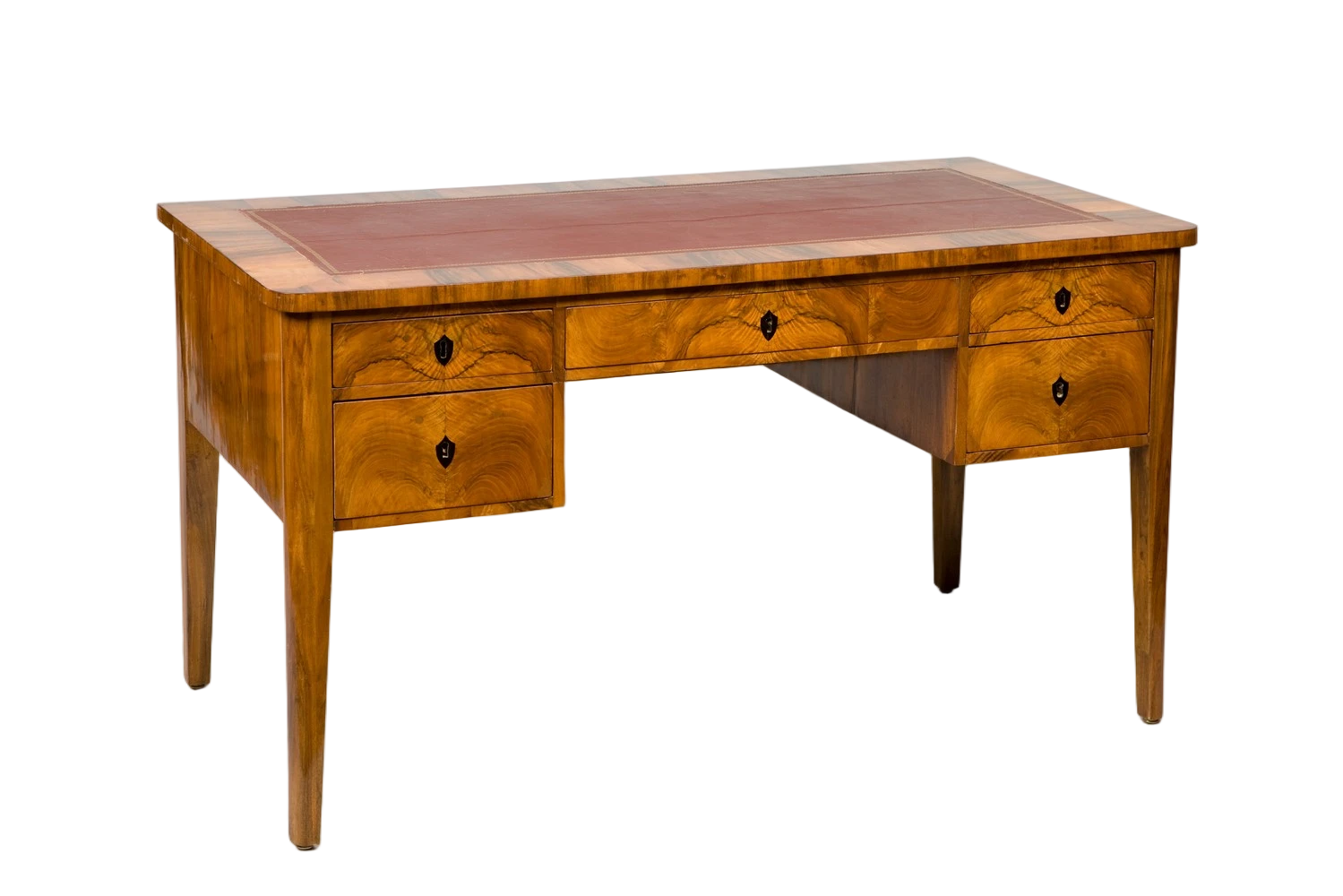
Likely Mainz, circa 1830.
Exquisitely veneered in walnut on a fine softwood body. The writing surface is masterfully finished in leather.
The locks have been thoughtfully supplemented.
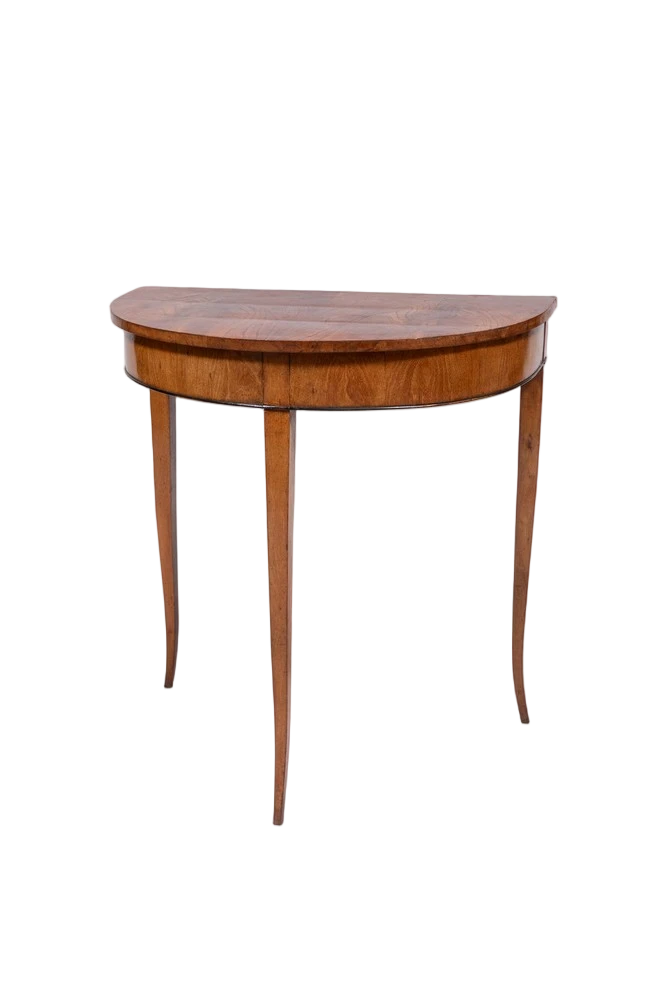
Saxony-Anhalt, circa 1825.
Exquisitely veneered in elm (Rüster) on a fine softwood body, with solid elm legs.
The design is accented by blackened wood used as a framing half-rod molding.
Product ID:
