Catalog: General

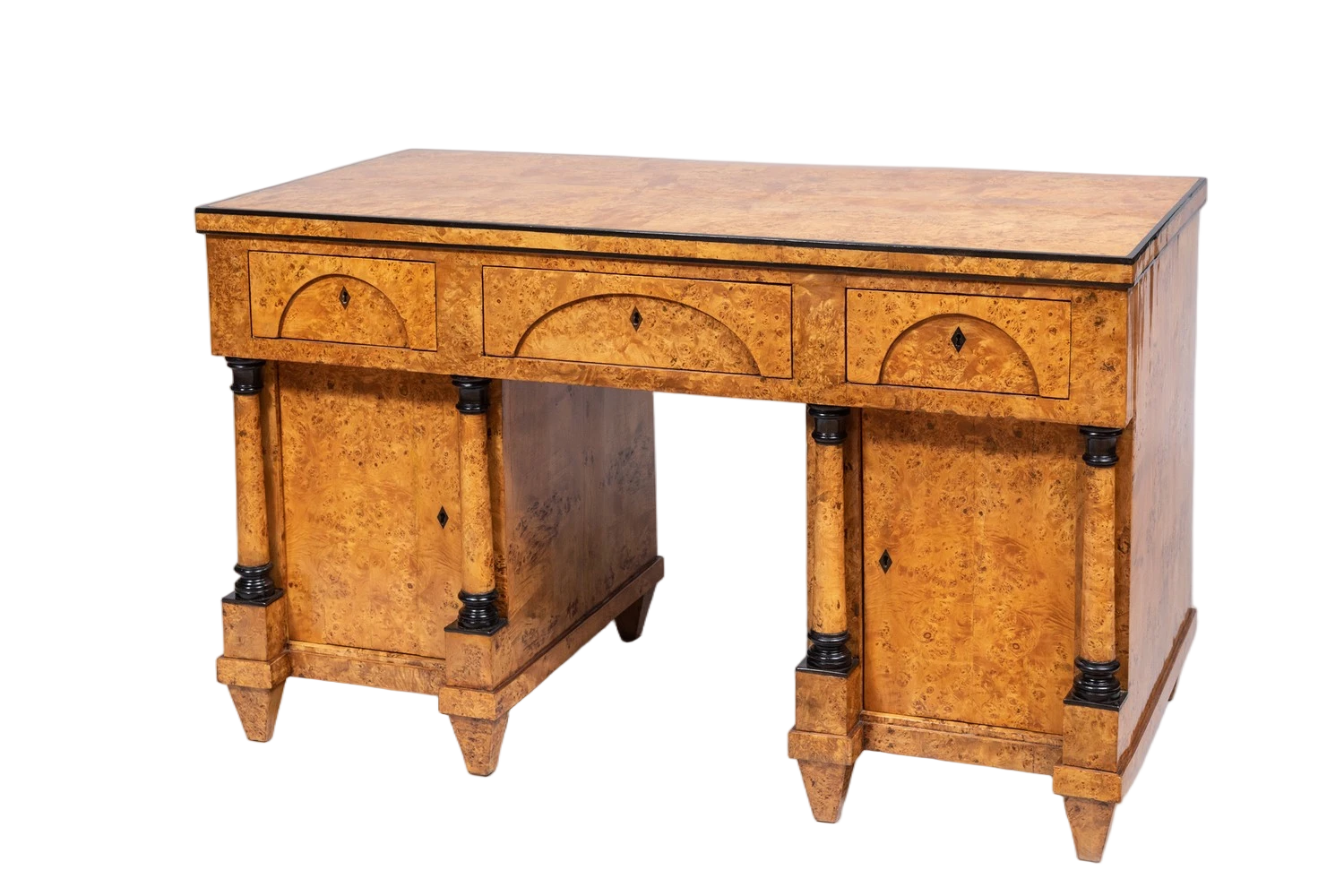
  • A freestanding Biedermeier writing desk.

    A freestanding Biedermeier writing desk.

    Baltic region, circa 1830.

    Exquisitely veneered in poplar burr on a body of softwood. The blackened sections of the full columns are expertly crafted from ebonized pearwood.

    Standing on its inaugural tapered legs.

    The reverse of the piece is also masterfully finished with poplar burr veneer.
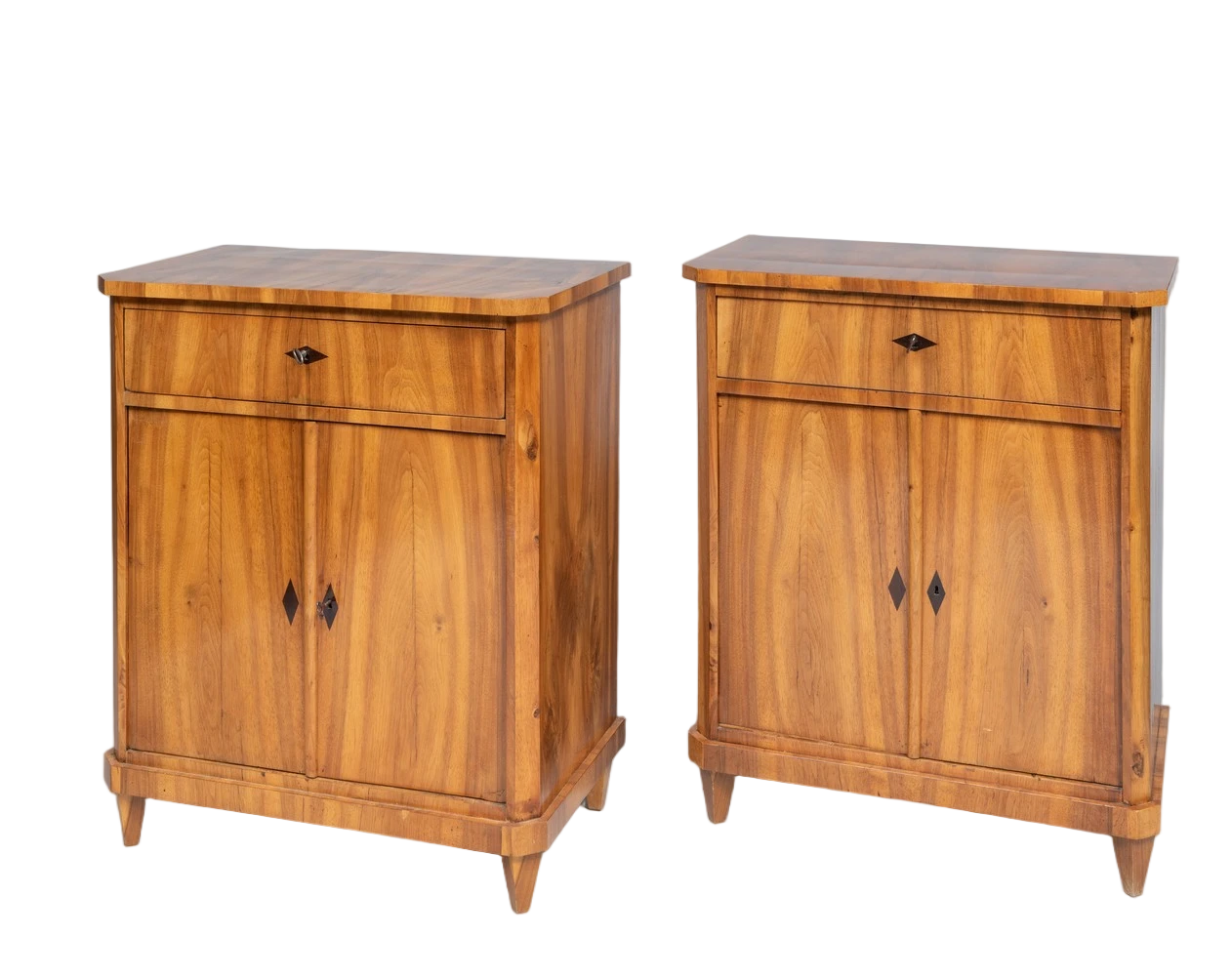
  • Pair of Elegant Biedermeier Demi-Cabinets.

    Pair of Elegant Biedermeier Demi-Cabinets.

    Southern Germany, likely Munich, circa 1820.

    Each bears a historical owner’s label on the reverse with the following inscription: “Brunner München 19, Hildebrandtstraße 16 III m”.

    Exquisite walnut veneer on a softwood carcass. Original recessed key escutcheons, likely of ebony.

    Feet are later additions. Original interior shelves.

    Predominantly original locks.

    Literature for comparison:

    This pair of demi-cabinets is illustrated in: Haaf, Rainer, Biedermeierwelten. Deutschland und Donaumonarchie, Leopoldshafen 2024, page 91, illustration 260.

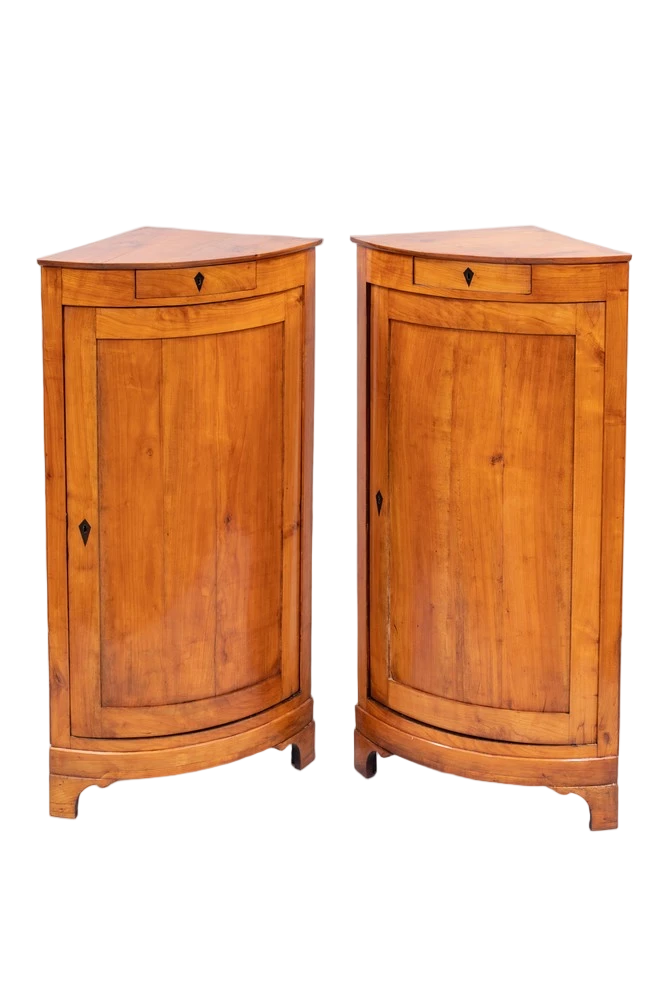
  • A pair of three-quarter high Biedermeier corner cabinets.

    A pair of three-quarter high Biedermeier corner cabinets.

    Rhineland, circa 1830.

    Crafted from solid and veneered cherrywood.

    Featuring inaugural board feet with elegant silhouette cut-outs.

    Adorned with inset ebony escutcheons.

    The back panels and one internal shelf have been thoughtfully supplemented.

    The cabinets retain their original locks.

    Literature: This pair of corner cabinets is illustrated in: Haaf, Rainer; Biedermeierwelten. Deutschland und Donaumonarchie, Leopoldshafen 2024, p. 105, fig. 321.

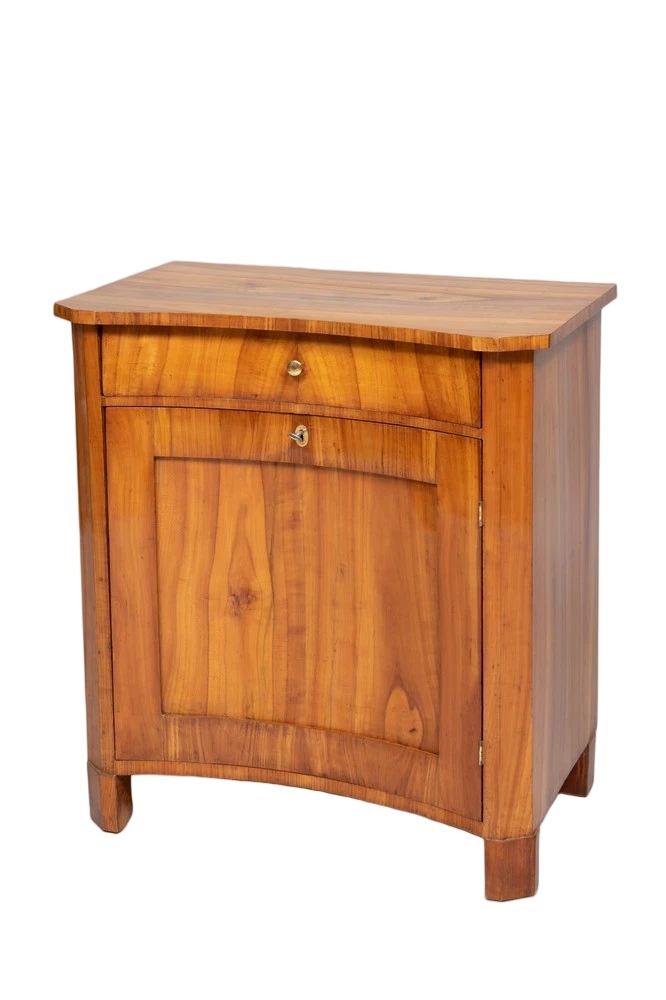
  • A dainty Biedermeier half-cabinet, distinguished by its elegantly recessed concave center door.

    A dainty Biedermeier half-cabinet, distinguished by its elegantly recessed concave center door.

    Saxony, circa 1830.

    Exquisitely veneered in cherrywood on a fine softwood body. Standing on its inaugural block feet crafted from solid cherrywood.

    The brass hardware dates from the period of the furniture’s creation, though it has been thoughtfully supplemented.

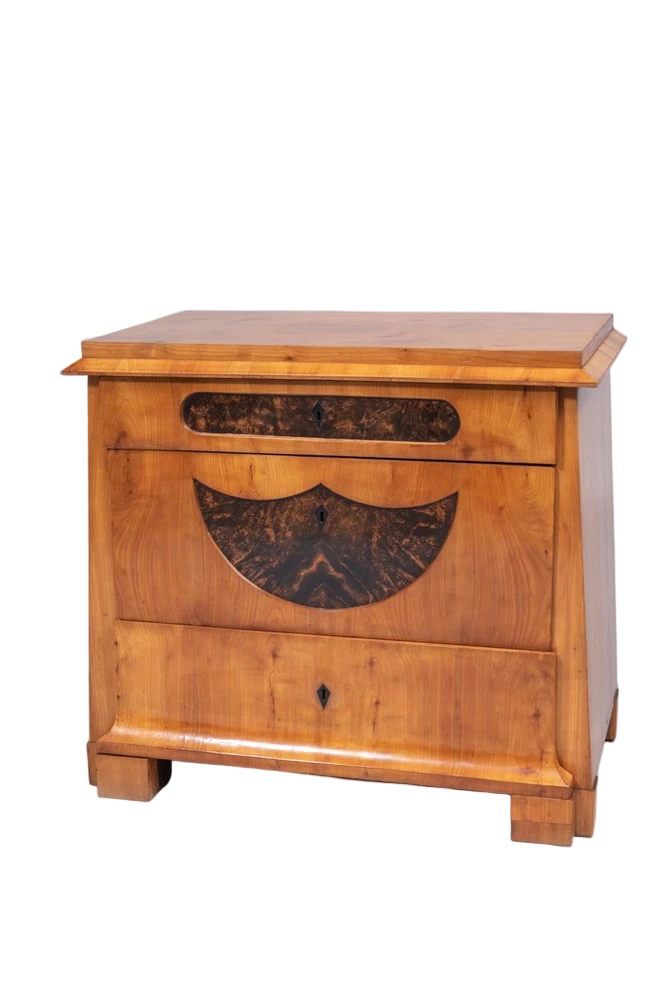
  • Nr. 512 – Rare Conical Biedermeier Commode.

    Nr. 512 – Rare Conical Biedermeier Commode.

    Central Germany, circa 1825.

    Oak carcass, veneered with cherrywood and brown-stained maple burl. Original veneered feet.

    Recessed escutcheons of ebony.

    The back panel has been supplemented with historic wood.

    Two of the mortise locks are original, one has been supplemented.

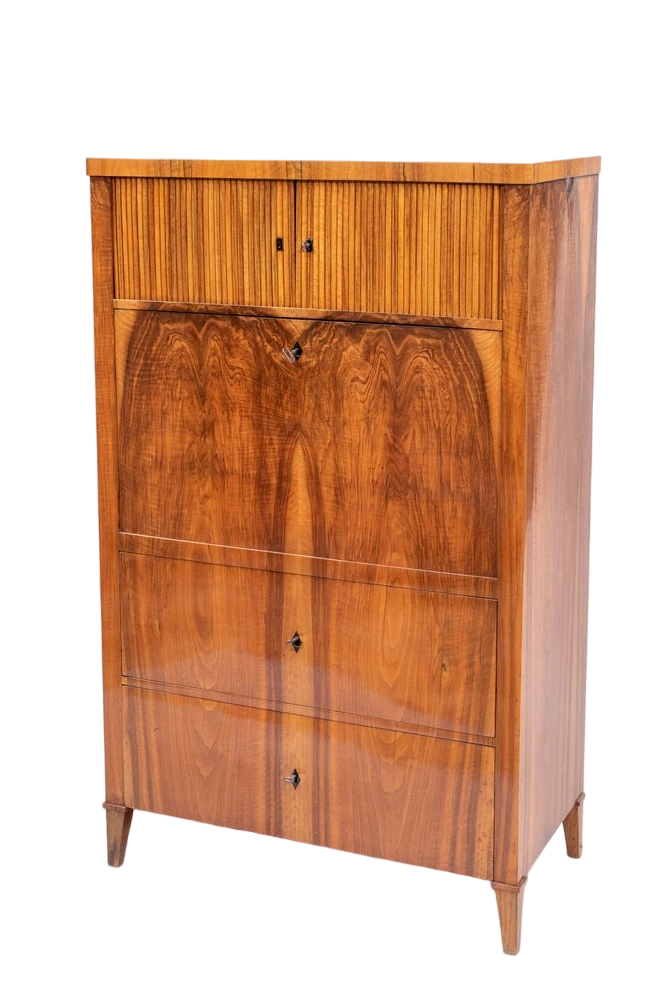
  • An exceptional Biedermeier bureau, featuring sophisticated slat doors and an exceptionally beautiful veneer pattern.

    An exceptional Biedermeier bureau, featuring sophisticated slat doors and an exceptionally beautiful veneer pattern.

    Likely from the court cabinetmaker Daniel’s workshop, Munich, circa 1820.

    Exquisitely veneered in walnut on a fine softwood body.

    The interior is masterfully veneered with dark-stained maple burr wood; the writing flap is cherry-veneered on its interior.

    Standing on its original, conical legs crafted from solid walnut.

    Complete with original locks and one inaugural key.

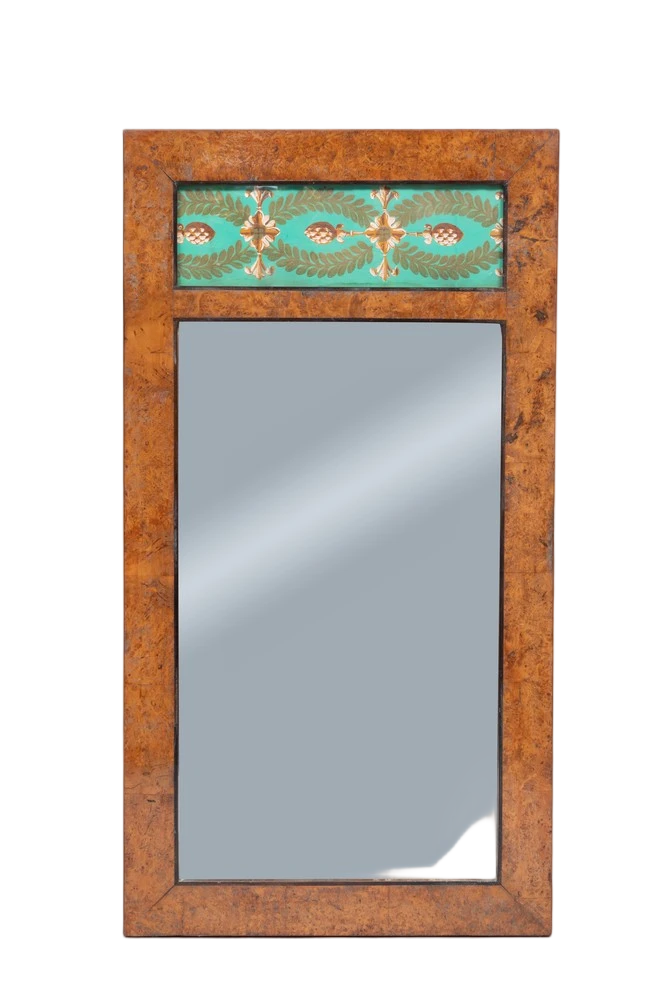
  • Nr. 218 – Biedermeier Mirror with Polychrome Painted Pediment in Original Condition.

    Nr. 218 – Biedermeier Mirror with Polychrome Painted Pediment in Original Condition.

    Presumably Munich, circa 1820.

    Alder root veneer on softwood.

    Original mirror glass and back panel.

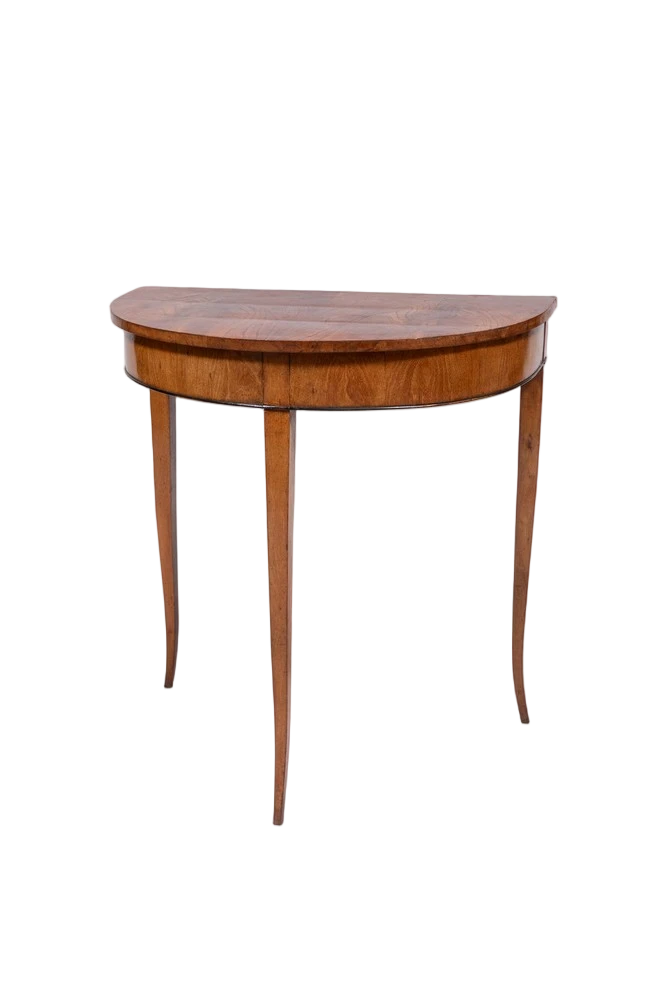
  • A dainty demi-lune console table, preserved in its immaculate original condition.

    A dainty demi-lune console table, preserved in its immaculate original condition.

    Saxony-Anhalt, circa 1825.

    Exquisitely veneered in elm (Rüster) on a fine softwood body, with solid elm legs.

    The design is accented by blackened wood used as a framing half-rod molding.

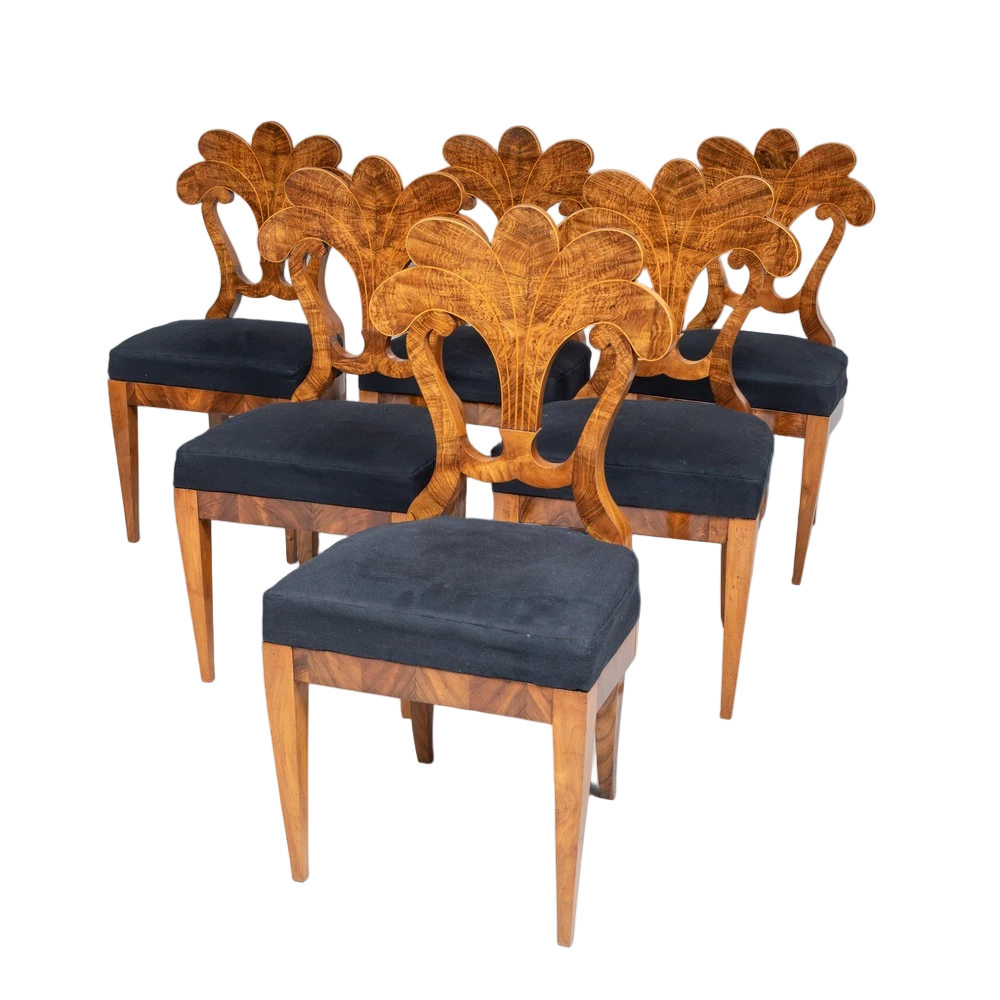
  • A set of six elegant Biedermeier fan-back chairs.

    A set of six elegant Biedermeier fan-back chairs.

    Vienna, circa 1830.

    Designed and executed by the Joseph Ulrich Danhauser Manufactory. Corresponding to Danhauser model number 89.

    The backrests are exquisitely veneered in finely and expressively grained walnut on a body of beech. The pieces are framed on all sides by dainty maple stringing.

    Complete with original, inset seat frames.

    The under-upholstery has been thoughtfully renewed with black muslin.

    Literature for comparison: This group of chairs is illustrated in: Haaf, Rainer, Biedermeier-Welten. Deutschland und Donaumonarchie, Leopoldshafen 2024, p. 587, fig. 2194.

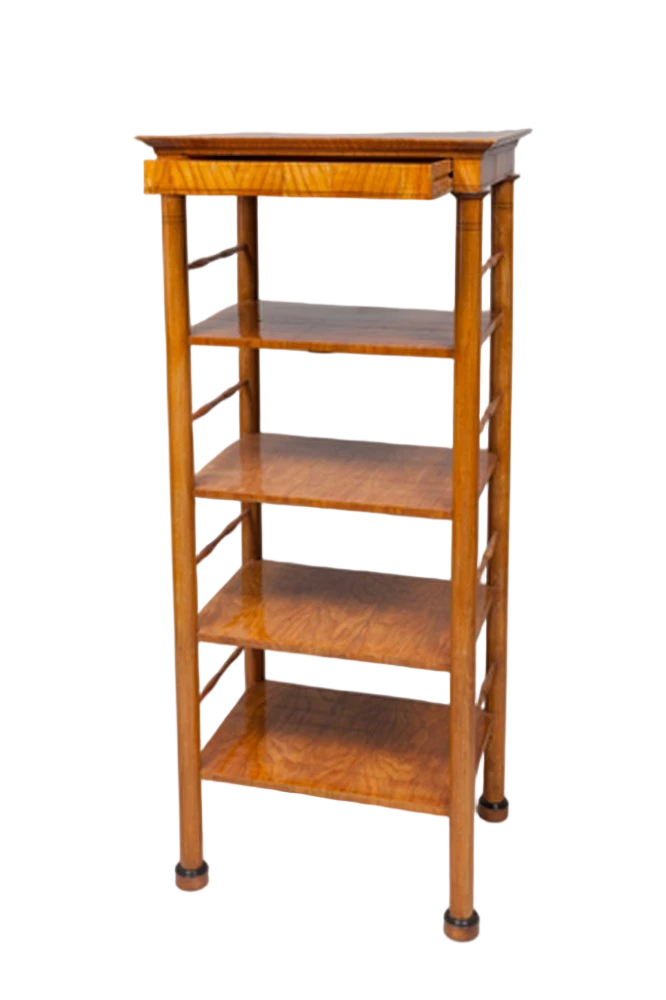
  • A dainty, free-standing étagère, featuring an elegantly recessed top drawer.

    A dainty, free-standing étagère, featuring an elegantly recessed top drawer.

    Designed and executed by the esteemed Joseph Ulrich Danhauser, Vienna, circa 1825/30.

    Masterfully crafted from solid cherry-colored ash wood and exquisitely veneered on an oak body. The piece is accented with mahogany thread inlays.

    Cf. design drawings by Danhauser for comparable étagères: KI 8972-1375 and “Servante No. 45”, KI 8972-1401, Museum of Applied Arts (MAK), Vienna.

×

Product ID:

Inquiry